Berlin's food reputation runs on currywurst and döner, and both earn it. But the best Middle Eastern food outside the Middle East itself is a short train ride from the Brandenburg Gate, on one street in Neukölln most visitors never hear about. This is a food crawl down Sonnenallee — Syrian shawarma, Palestinian falafel, Yemeni cooking, Damascene sweets, halal butchers and Levantine grocers, roughly in walking order.
Sonnenallee: how a Beirut street ended up in Neukölln
Berliners have called this street the Arab Street for years — a nickname common enough that Middle East Eye, The National and the South China Morning Post have all covered it. It started in 1975, when Lebanese refugees fleeing the civil war settled North Neukölln; Syrian, Palestinian and Yemeni communities followed in the decades after. Neukölln today has roughly 33,000 Arab residents — about a quarter of Berlin's entire Arab population — and Middle Eastern-origin residents make up close to 18% (around 55,000 people) of the borough.
We know this street because we mapped it ourselves: our own count of roughly 30 businesses on and just off Sonnenallee is one of the densest, most self-contained Arab strips we've seen anywhere — a halal butcher next to a goldsmith next to a falafel counter next to a bridal shop. This guide covers the 15 food, sweets and grocery spots from that list, in the order you'd actually walk them.
Five words worth knowing before you go
- Shawarma — meat shaved off a vertical spit, wrapped or plated.
- Falafel — fried chickpea patties, the vegetarian backbone of every menu here.
- Kunafa (knafeh) — syrup-soaked cheese pastry, usually pistachio-topped.
- Manakish — Syrian flatbread, often topped with za'atar or cheese.
- Warbat — a warm, cream-filled pastry, closer to a cream puff than baklava.
The mains: shawarma, falafel, grills and Yemeni cooking
Seven stops, all within a few minutes of each other on or just off Sonnenallee. You will not manage all seven in one sitting — treat this as a menu, not an itinerary.
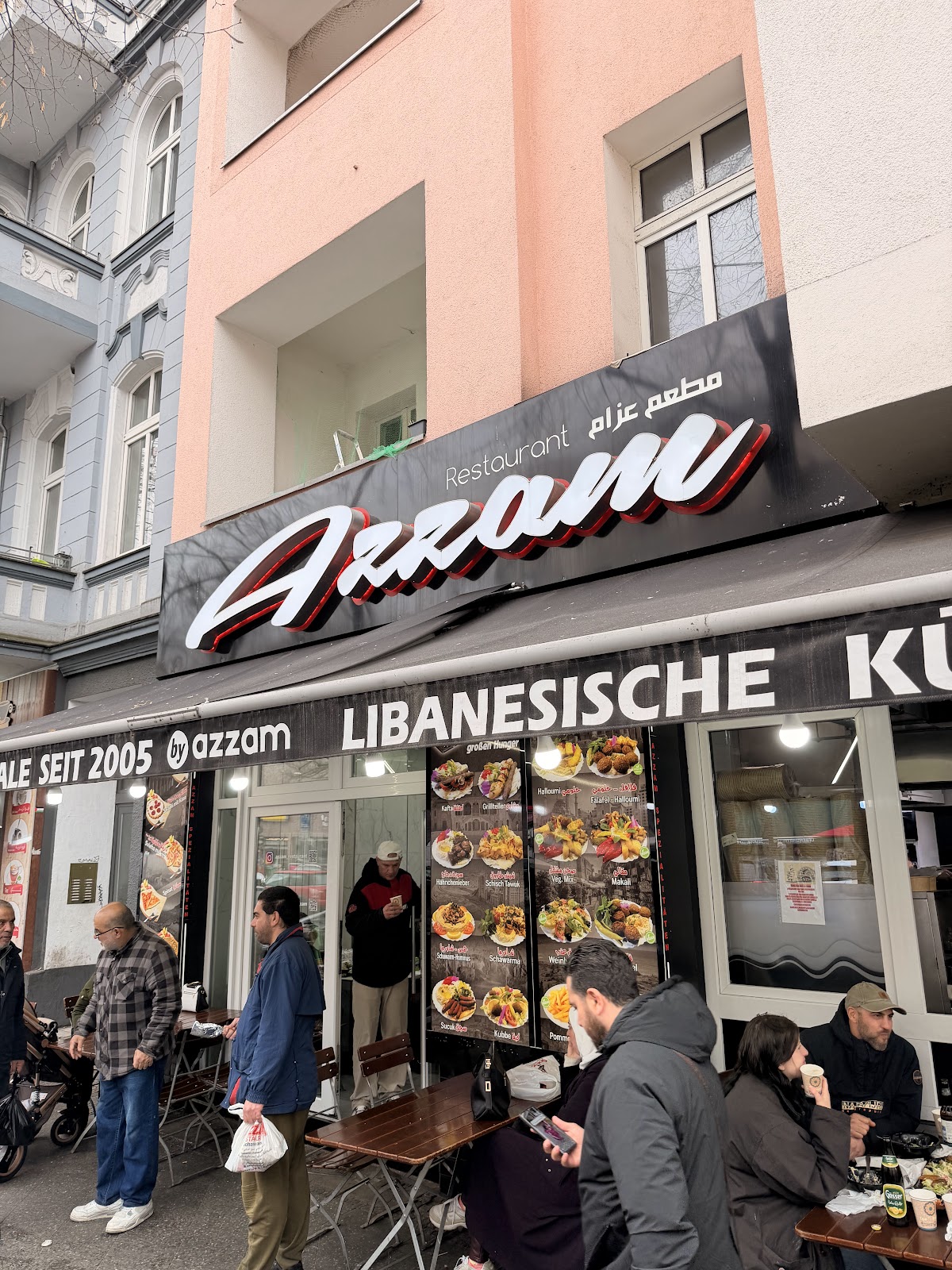
Azzam Restaurant
The flagship of the street. Syrian shawarma and famously massive group platters — reviewers consistently say it's simply a different operation from the shawarma shops around it.
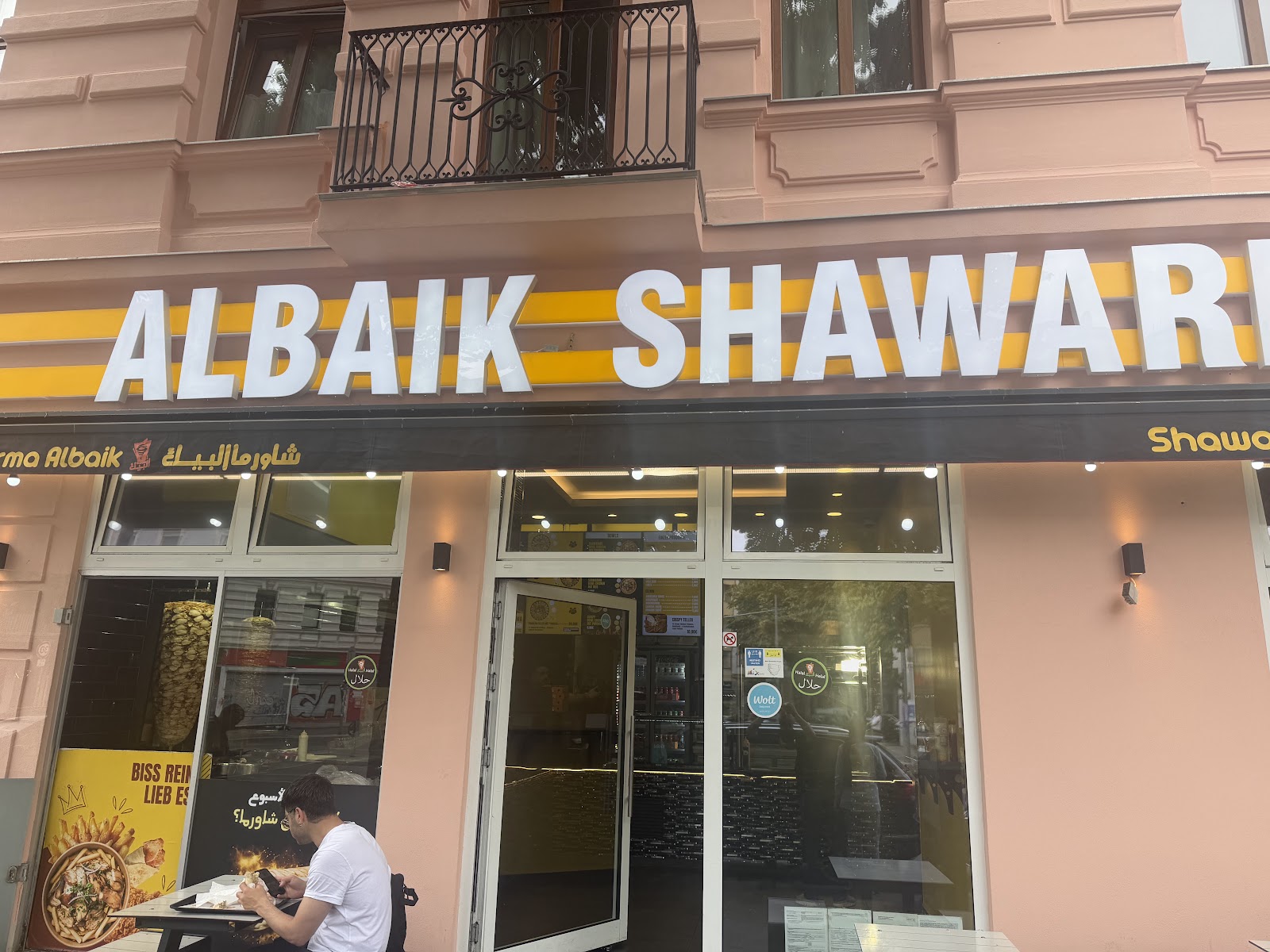
Shawarma Albaik
Beef and chicken shawarma wraps done exactly right — reviewers call it a genuine fixture of 'what is called the Arab street in Berlin.'
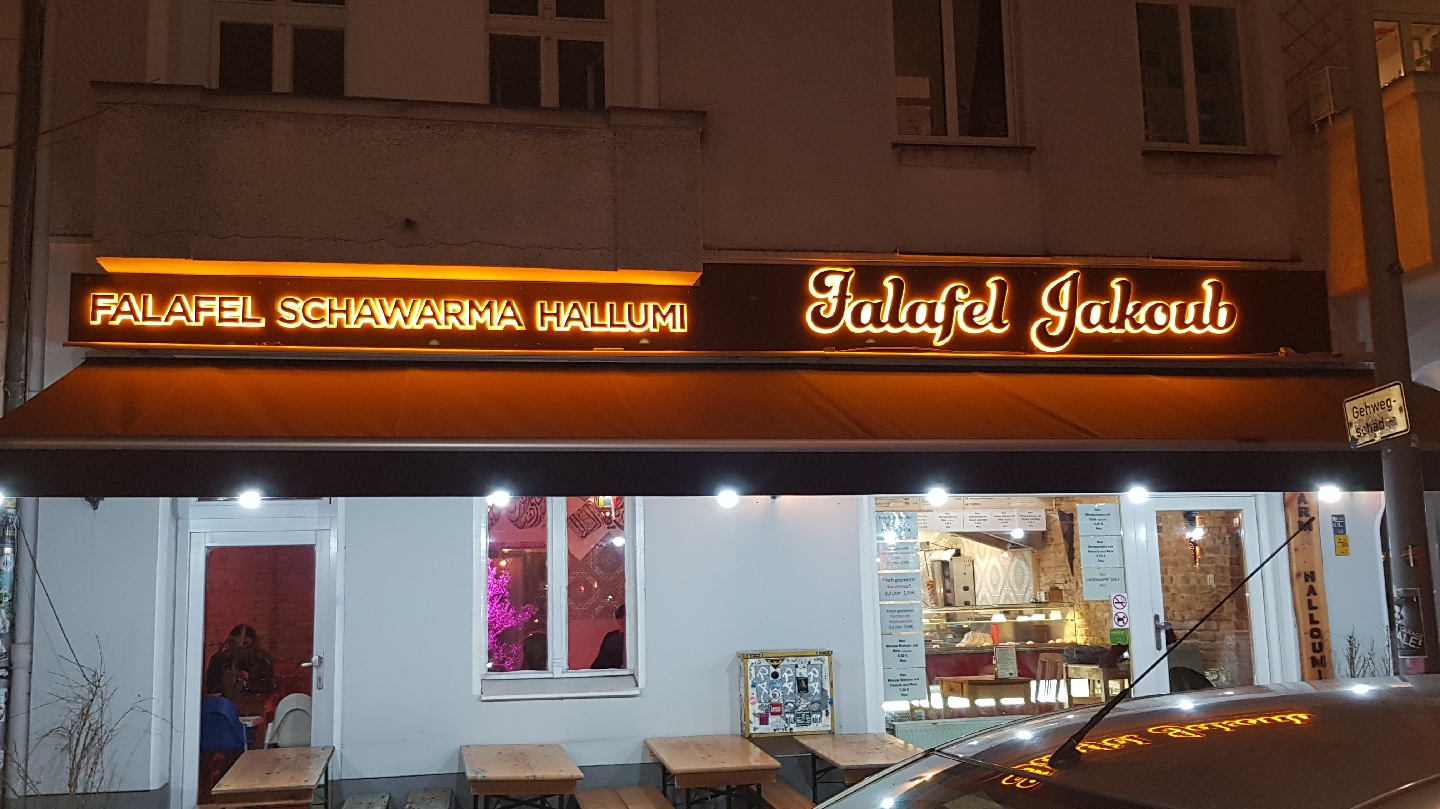
Falafel Jakoub
A falafel sandwich sauced with mango and hazelnut, plus a shawarma-and-baba-ganoush wrap that's just as worth ordering.
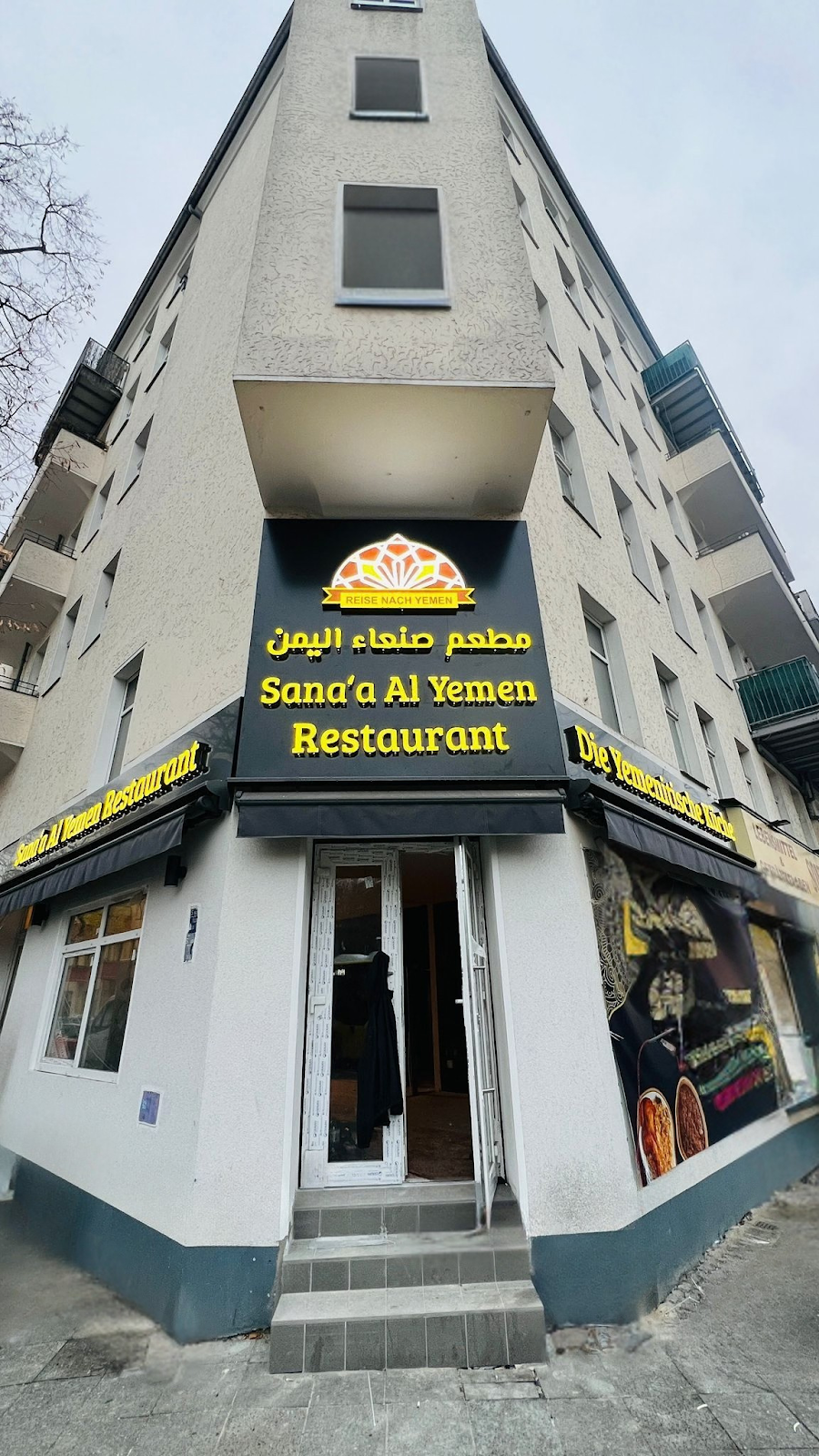
Sana'a Al Yemen
Yemeni specialties in genuinely generous portions; demand got them a bigger space, which tells you what you need to know.
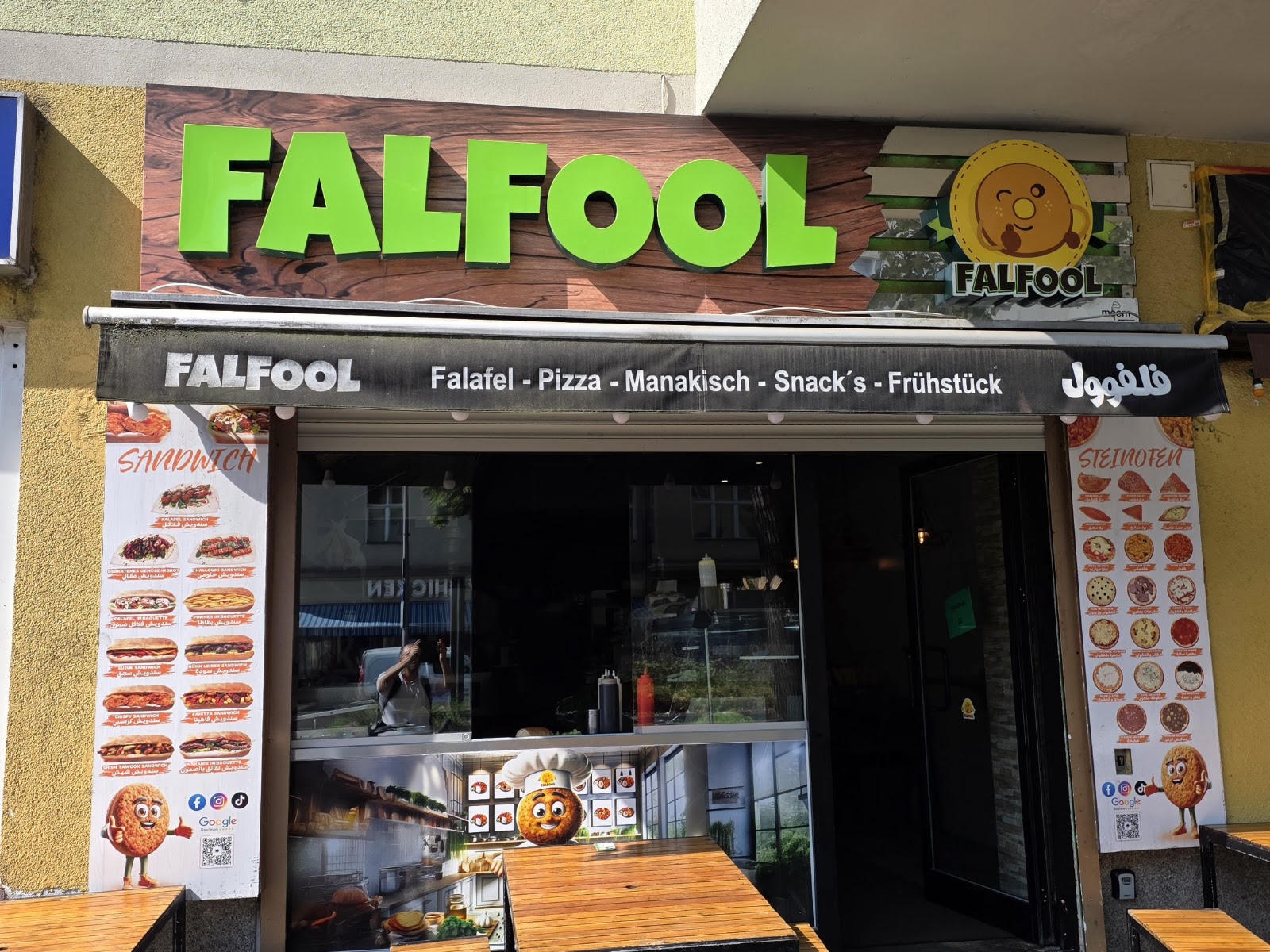
Falfool
Falafel and baked goods that multiple reviewers independently call a hidden gem — easy to walk past, worth stopping for.
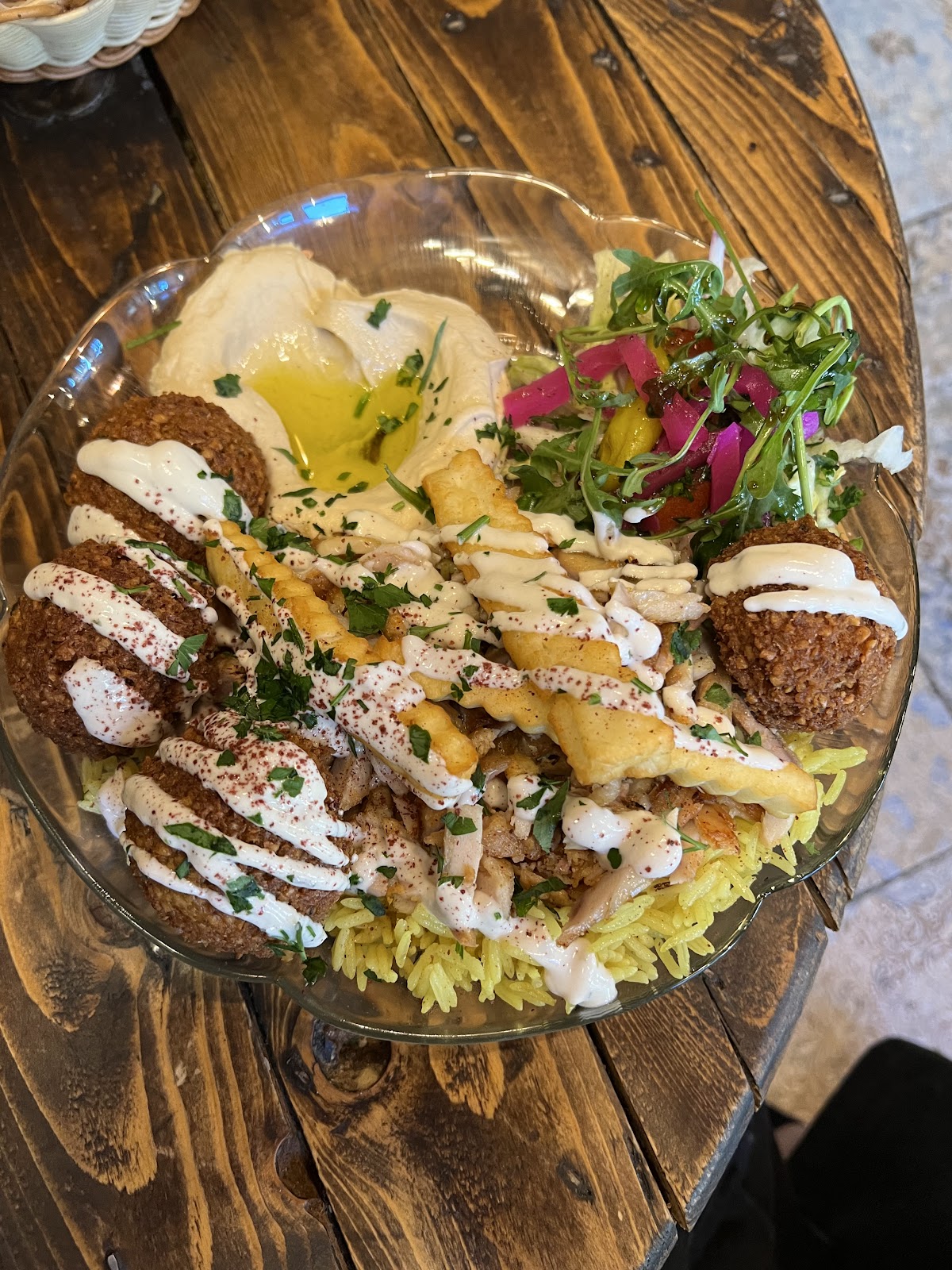
Al Hanan
One reviewer's 'best falafel in Europe'; another puts it in their personal world top three. Both are believable after one bite.
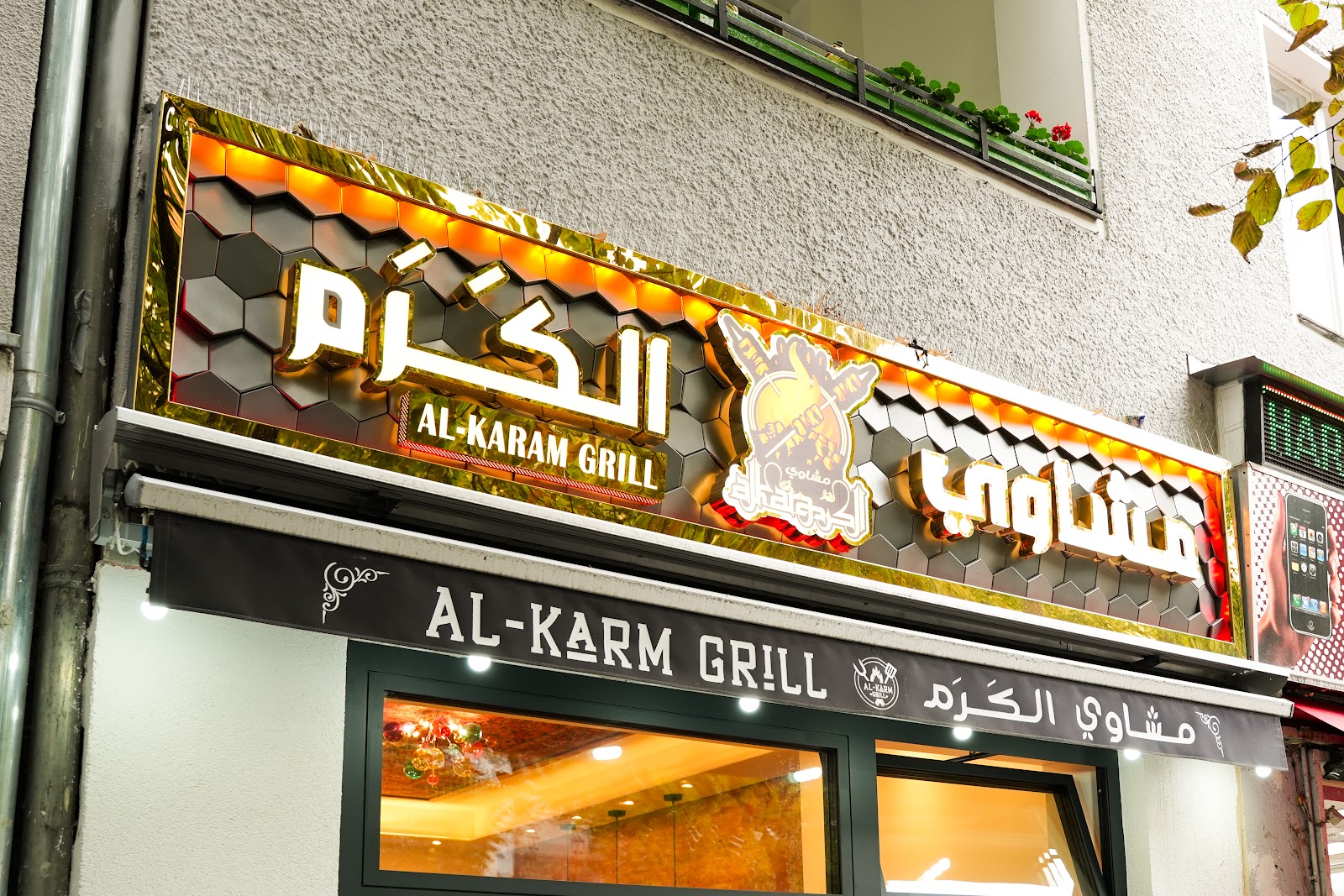
Al-Karam Grill
Mixed grills cooked fresh to order right in front of you — go when you want something charred and immediate.
Sweets and bakery: kunafa, baklava, warbat, manakish
Save room. This is the part of the crawl people talk about after they've gone home.
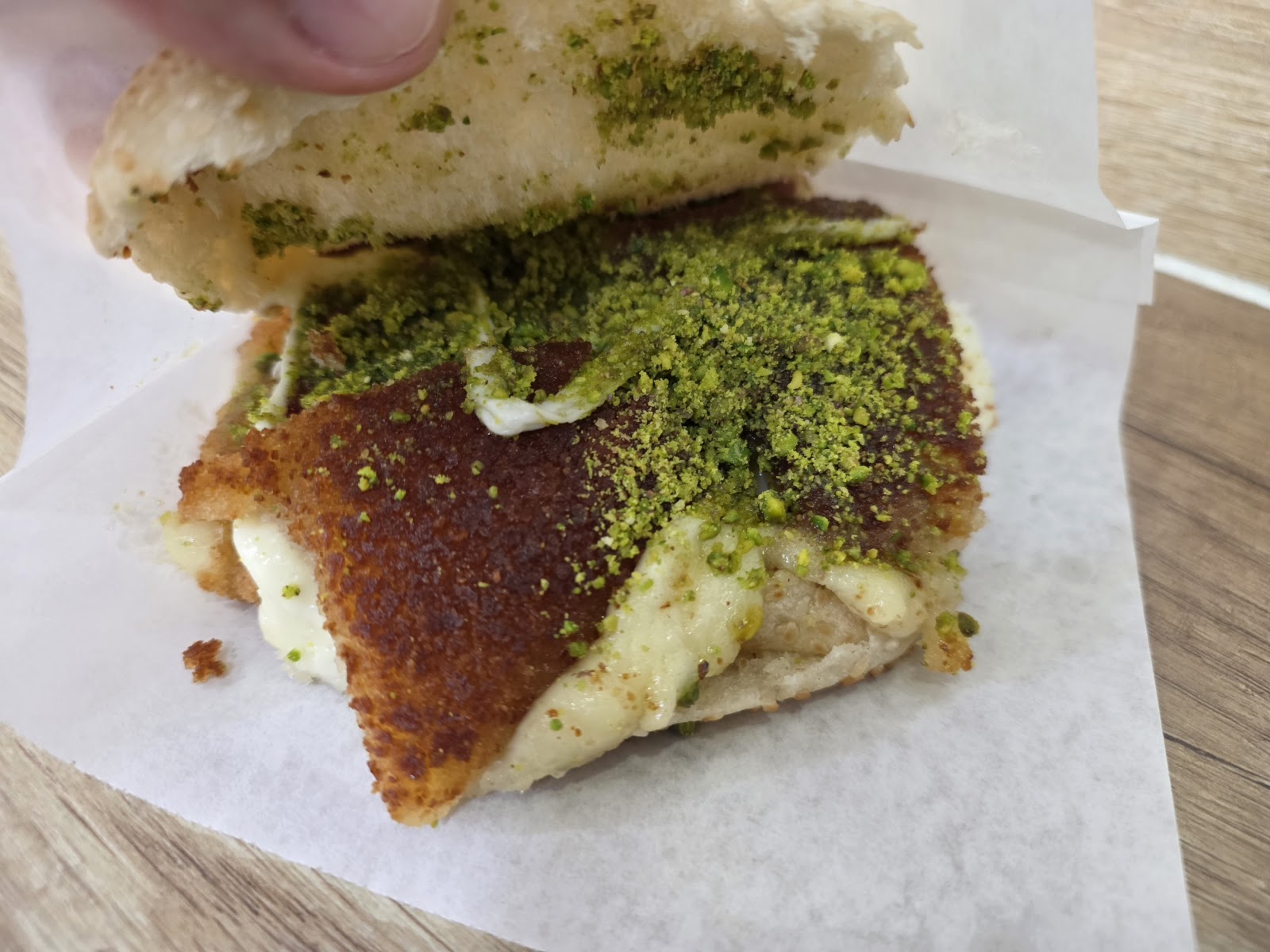
Malek Al Konafeh
The kunafa specialist — crunchy or soft, pistachio-topped — plus a proper Arabic ice cream to go with it. Syrian sweets, done seriously.
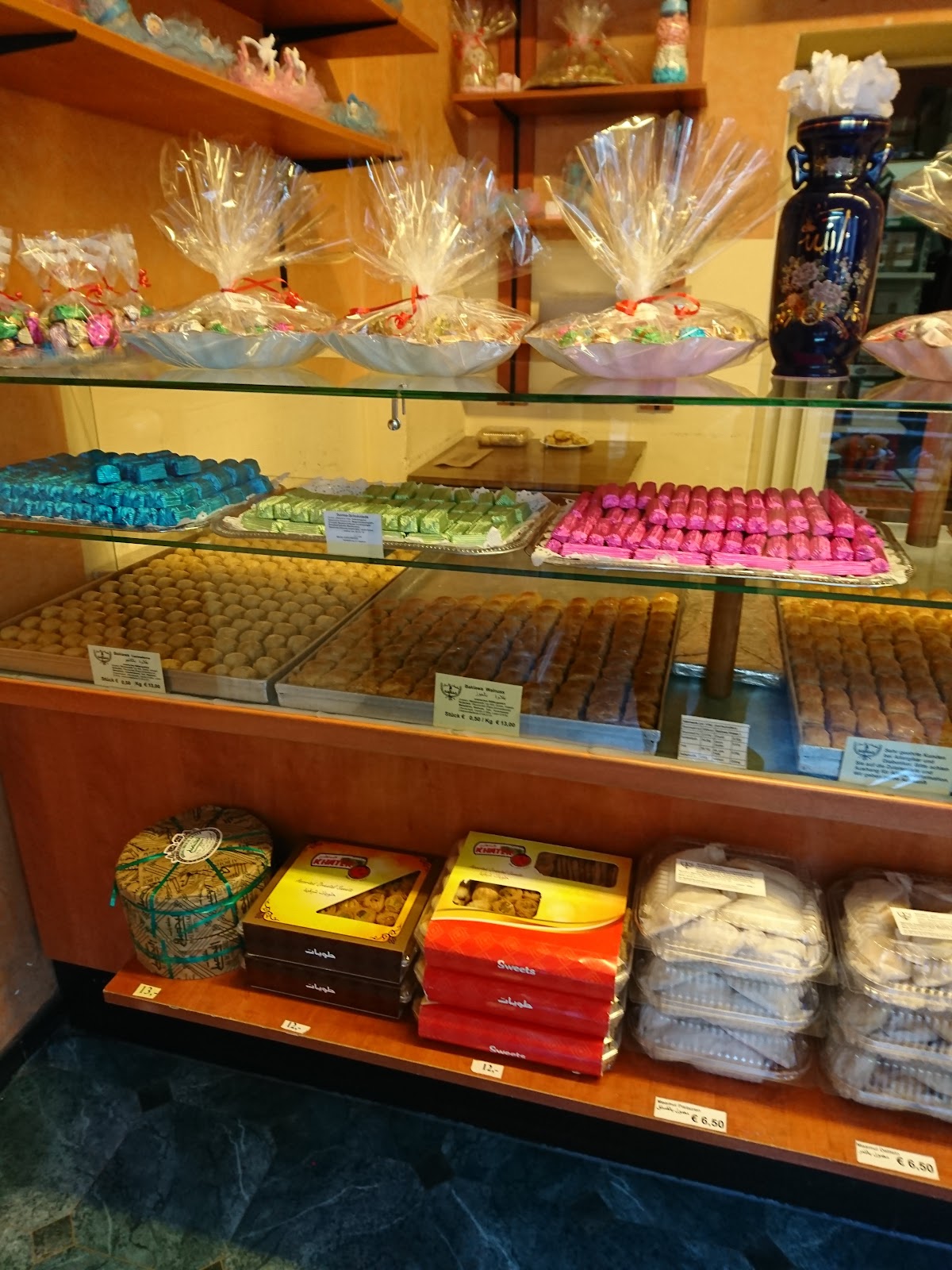
Habibi Süßigkeiten
Arabic and Turkish sweets with warbat — a cream-puff pastry — served still warm, alongside coffee strong enough to justify the sugar.
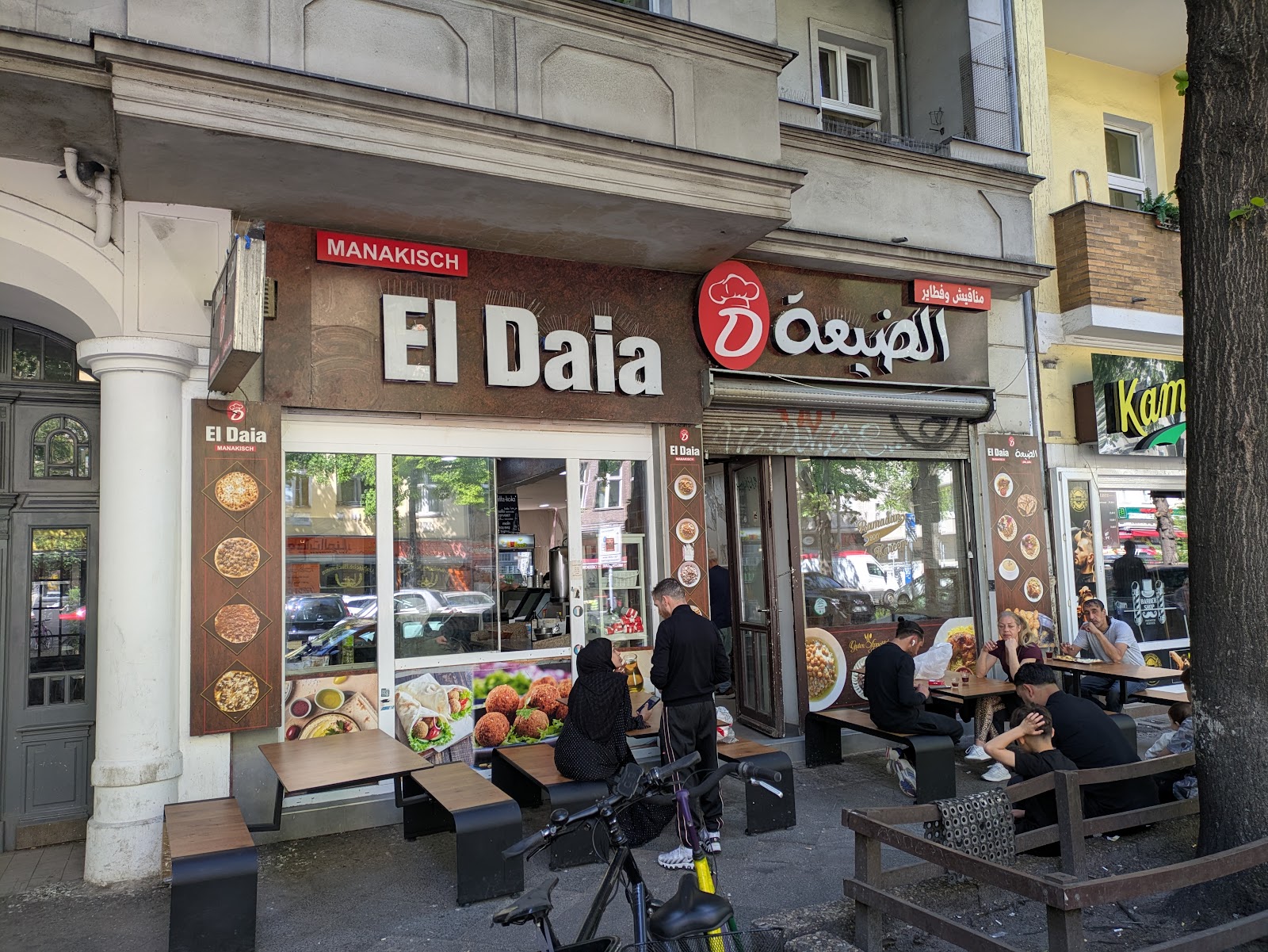
El Daia
A bakery turning out manakish, Syrian flatbread, fresh from the oven — reviewers call it tasty and genuinely underpriced.
Stock up like a local: markets and halal butchers
If your stay has a kitchen, or you just want to take a piece of the street home with you, this is where regulars actually shop.
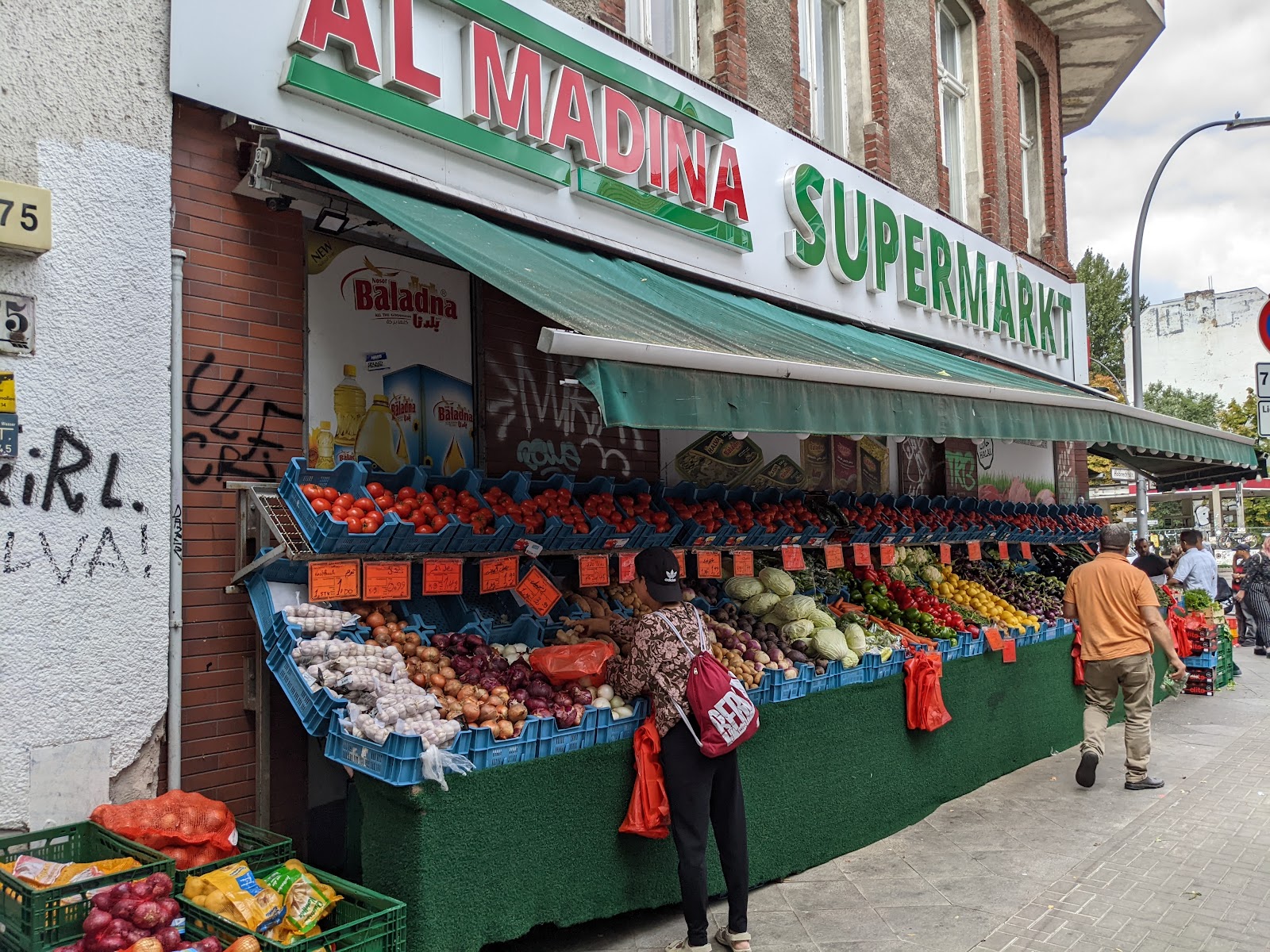
Al-Madina Supermarkt
A proper Levantine grocery — spices, produce, cheese, nuts — that reviewers describe, more than once, as 'memories of homeland.'
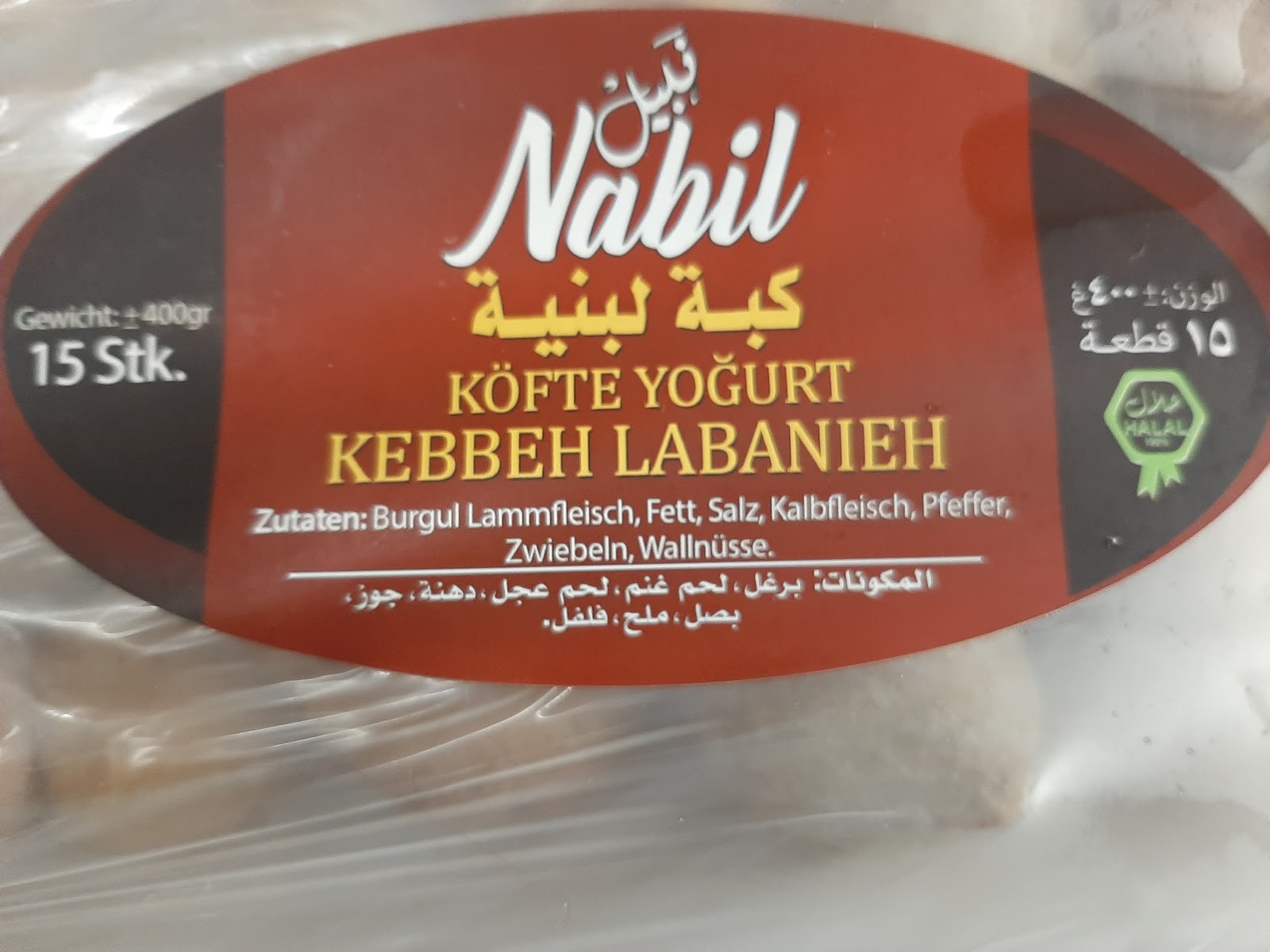
Supermarkt Alscham
A neighborhood Arab grocery with the kind of warm, personal service that gets reviewers calling the staff 'my neighbours.'
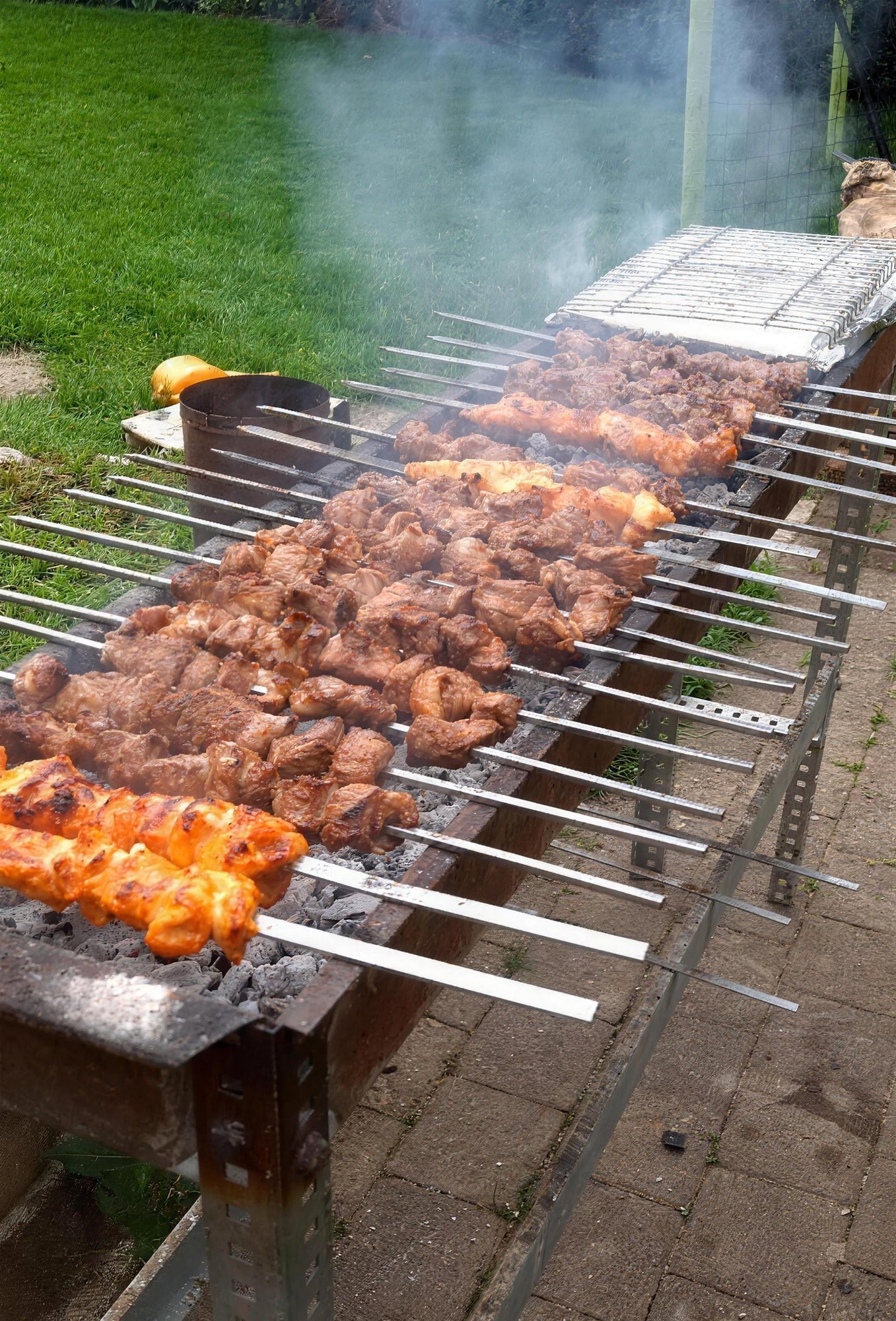
Fleischerei Yousef Abu Haija
A halal butcher reviewers call the best fresh meat on the street — good for BBQ cuts if you're cooking.
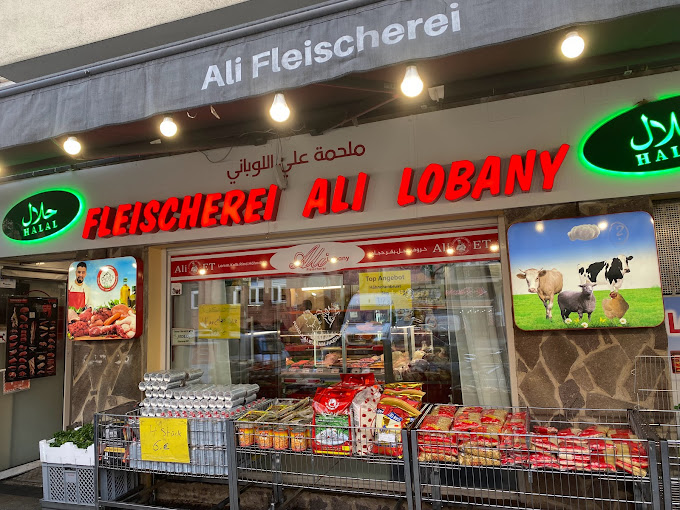
Fleischerei Ali Lobany
Chicken, beef and lamb from a halal butcher whose owner personally replies to every single review — a good sign of how seriously he takes the shop.
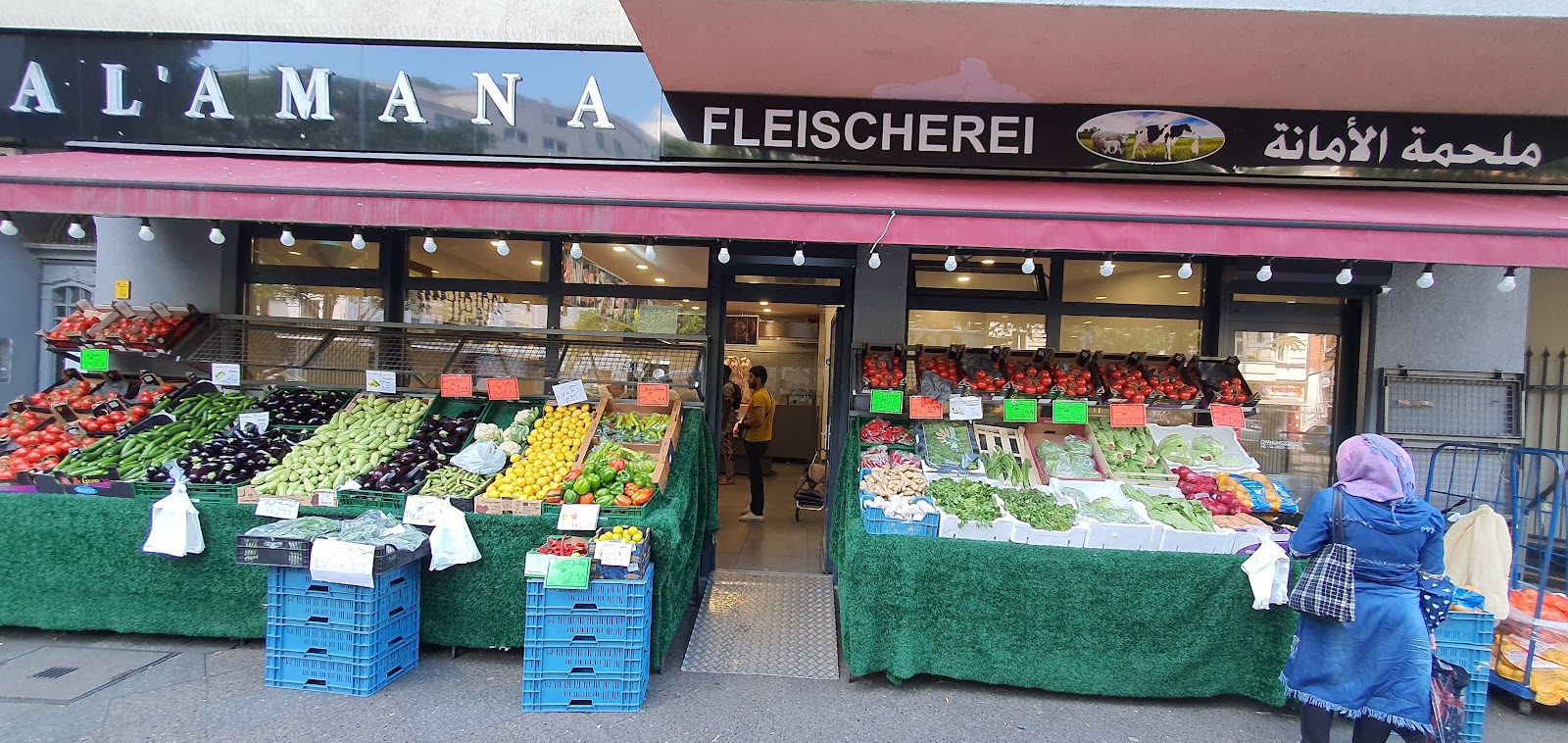
Al Amana Fleischerei
A halal butcher with an adjoining mini-market — mutton, beef, chicken and fresh produce side by side, one stop.
What to order where
| Order this | Where | Why it's the move |
|---|---|---|
| Giant shawarma platter | Azzam Restaurant | Built for groups. 4.8★, 6,600+ reviews. |
| Mango-hazelnut falafel | Falafel Jakoub | A sauce nobody else on the strip uses. |
| Yemeni platter | Sana'a Al Yemen | Generous portions — go hungry. |
| Falafel, if you only eat one | Al Hanan | Reviewers rank it among Europe's best. |
| Kunafa (knafeh) | Malek Al Konafeh | Crunchy or soft, pistachio-topped. |
| Warm warbat & baklava | Habibi Süßigkeiten | Served fresh, with strong coffee. |
Ratings and review counts are from our own first-party dataset on each business's real page.
Where döner and currywurst fit in
Sonnenallee is the deep cut, but it's part of Berlin's wider street-food identity, not apart from it. Currywurst was invented right here, by Herta Heuwer in 1949, and it's still the sentimental mascot of Berlin street food: sliced sausage, curried ketchup, done in two minutes.
Döner is the bigger story. Berlin-style döner-in-bread — meat, tomato, cucumber, cabbage and sauce folded into flatbread — is widely credited to Kadir Nurman in Kreuzberg in 1972, though the claim is genuinely disputed, with competing stories and a possible earlier Istanbul origin. Whoever invented it, döner is now Berlin's biggest-selling street food, ahead of currywurst — and Sonnenallee's shawarma shops are a close cousin of the same tradition. Order both and you'll taste the family resemblance.
Neukölln's other great food institution is the Maybachufer canal-side market (the 'Türkenmarkt') — Turkish and Middle Eastern produce, cheese, bread and fabric, historically Tuesday and Friday afternoons. Confirm the day before you build a trip around it; if it lines up, it pairs naturally with a Sonnenallee afternoon.
How to actually do the crawl
Sonnenallee has its own S-Bahn station, or take the U7 to Karl-Marx-Straße or Rathaus Neukölln and walk in. Go in the afternoon rather than right after lunch: start with a shawarma or falafel main, walk it off past the goldsmiths, barbershops and the bridal boutique that round out the rest of the strip, then land on kunafa or warbat when you're ready. Two to three hours does it easily, and you'll still have only scratched the fifteen places above — that's rather the point. Go back.
Basing yourself in Neukölln or nearby Kreuzberg puts Sonnenallee a short walk or one stop away, instead of a special trip across town.
Frequently asked questions
What is Sonnenallee, and why is it called Berlin's 'Arab Street'?
Sonnenallee is a street through Neukölln nicknamed 'the Arab Street' by local and international press alike, including Middle East Eye and The National. Its Arab character dates to 1975, when Lebanese civil-war refugees settled North Neukölln; Syrian, Palestinian and Yemeni communities followed. Neukölln now has around 33,000 Arab residents, about a quarter of Berlin's total Arab population.
Is Sonnenallee walkable as a food crawl?
Yes — that's what makes it work. Almost every business here sits directly on Sonnenallee or within a two-block walk. You can genuinely do shawarma, falafel, sweets and a market stop in one afternoon on foot, no transit needed once you're there.
What's the one thing to eat if you only have time for one stop?
Either the shawarma platter at Azzam Restaurant — the flagship of the street, built for sharing — or the falafel at Al Hanan, which multiple reviewers rank among the best in Europe. If you can manage two stops, pair either with kunafa at Malek Al Konafeh to finish.
Land already connected with an eSIM instead of hunting for a SIM at the airport, and don't travel uninsured — one medical bill abroad costs many times the premium.