Syria
Damascus
A respectful food-and-heritage guide to the old city's kitchens, sweets and coffeehouses. Here for the culture, and the day the doors open wider.
 Photographed on the ground · Damascus
A respectful food-and-heritage guide to the old city's kitchens, sweets and coffeehouses. Here for the culture, and the day the doors open wider.
Photographed on the ground · Damascus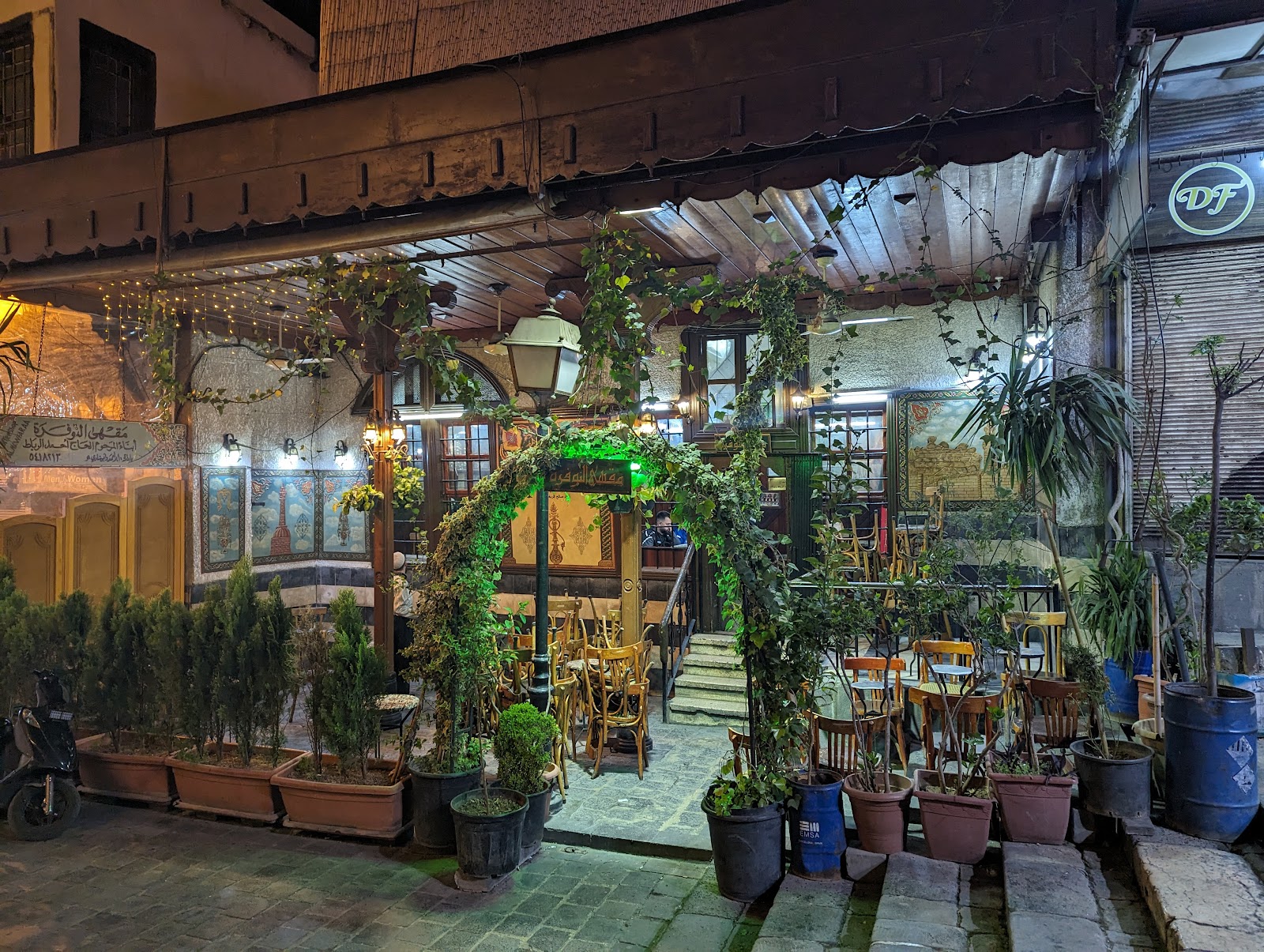
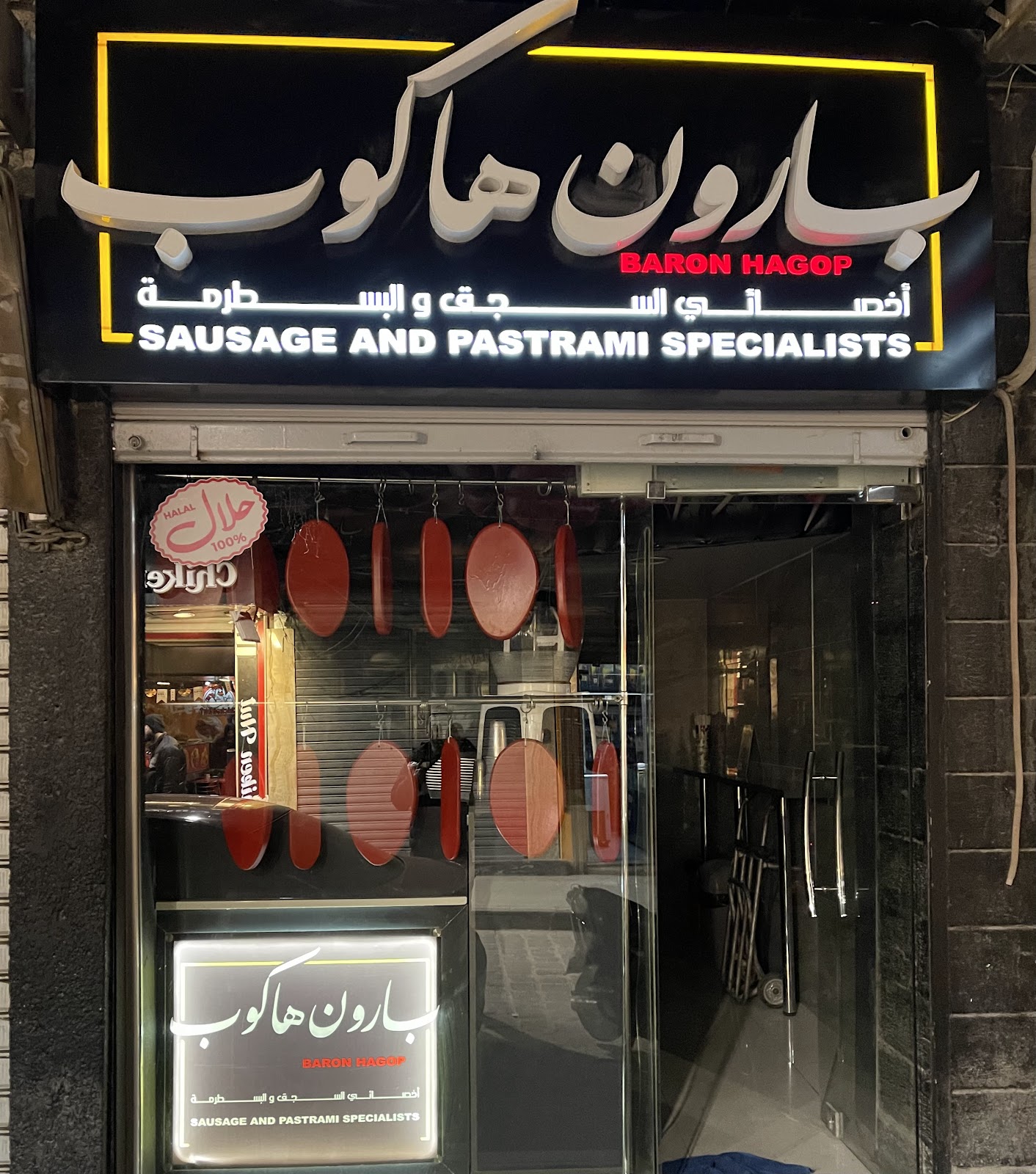
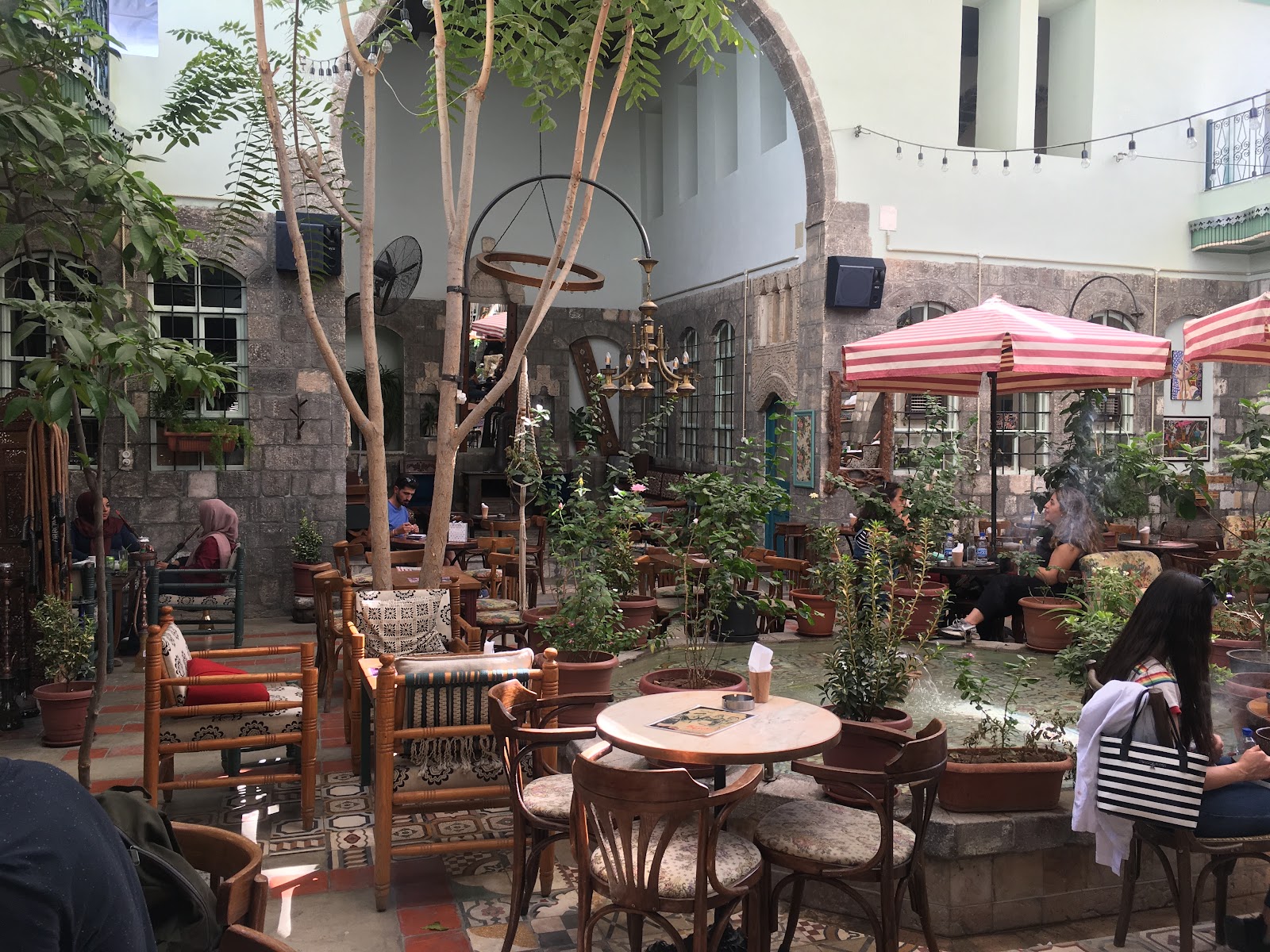
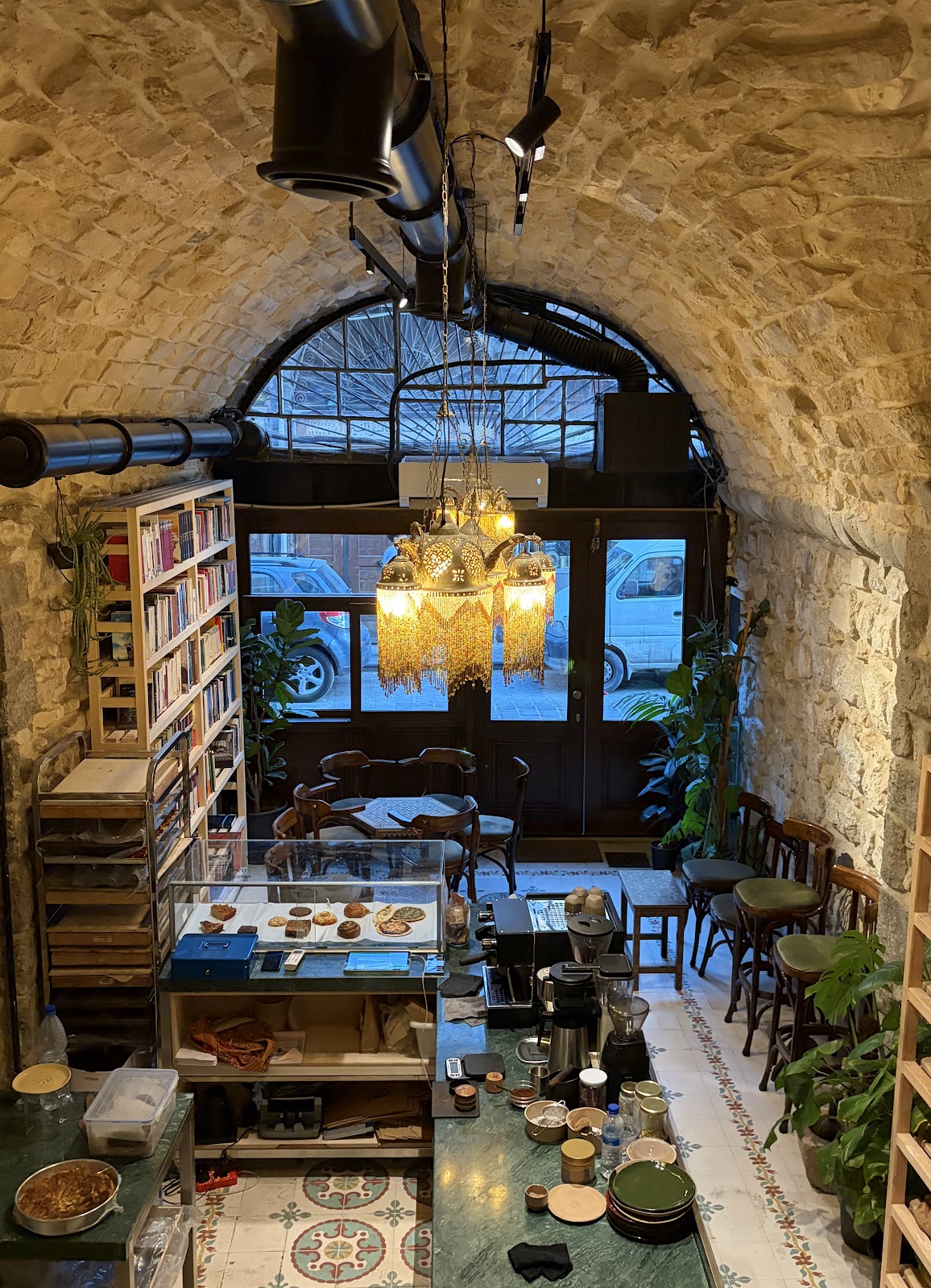
Damascus is one of the oldest continuously inhabited cities on earth — a claim it shares with only a handful of others, and earns as honestly as any of them. This guide is for its table: the ice cream still pounded by hand in the souq, the coffeehouse where a storyteller still reads aloud beside the Umayyad Mosque, the courtyard houses now serving fatteh instead of standing empty. It's written for the food and the culture, right now, and for the day the doors open wider.
Old Damascus is built around eating slowly and eating together. A real meal opens with mezze — small shared plates meant for a table of family and friends, not a solo diner — before kibbeh, fatteh or grilled meats arrive. Sweets are their own category: booza worked by hand, knafeh soaked in syrup, mabrouma and baklawa stacked behind glass counters that have been doing this since long before most of the world's cities looked anything like they do now. And running through nearly all of it is the coffeehouse — thick Arabic coffee, sweet tea, a nargileh, and in one particular café beside the mosque, a storyteller still reading from an old leather-bound book to a room of regulars.
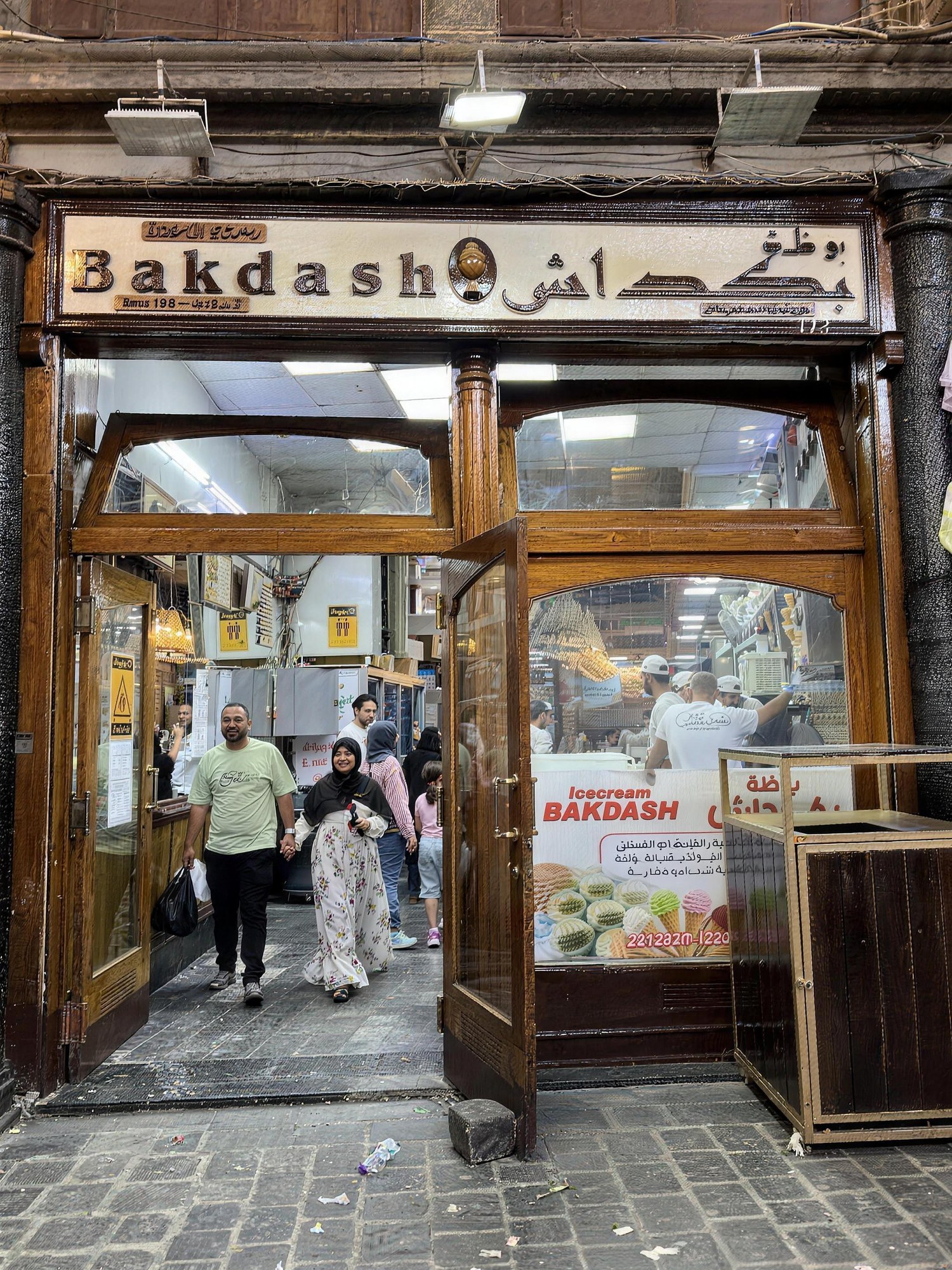
The legend of the souq, open since the 1880s — booza hand-pounded from mastic and salep until it stretches like taffy, served with clotted cream and pistachio. No delivery, no imitation.
Damascus's oldest café, tucked beside the Umayyad Mosque — tea or Arabic coffee with a nargileh while a hakawati storyteller reads aloud from an old leather-bound book.
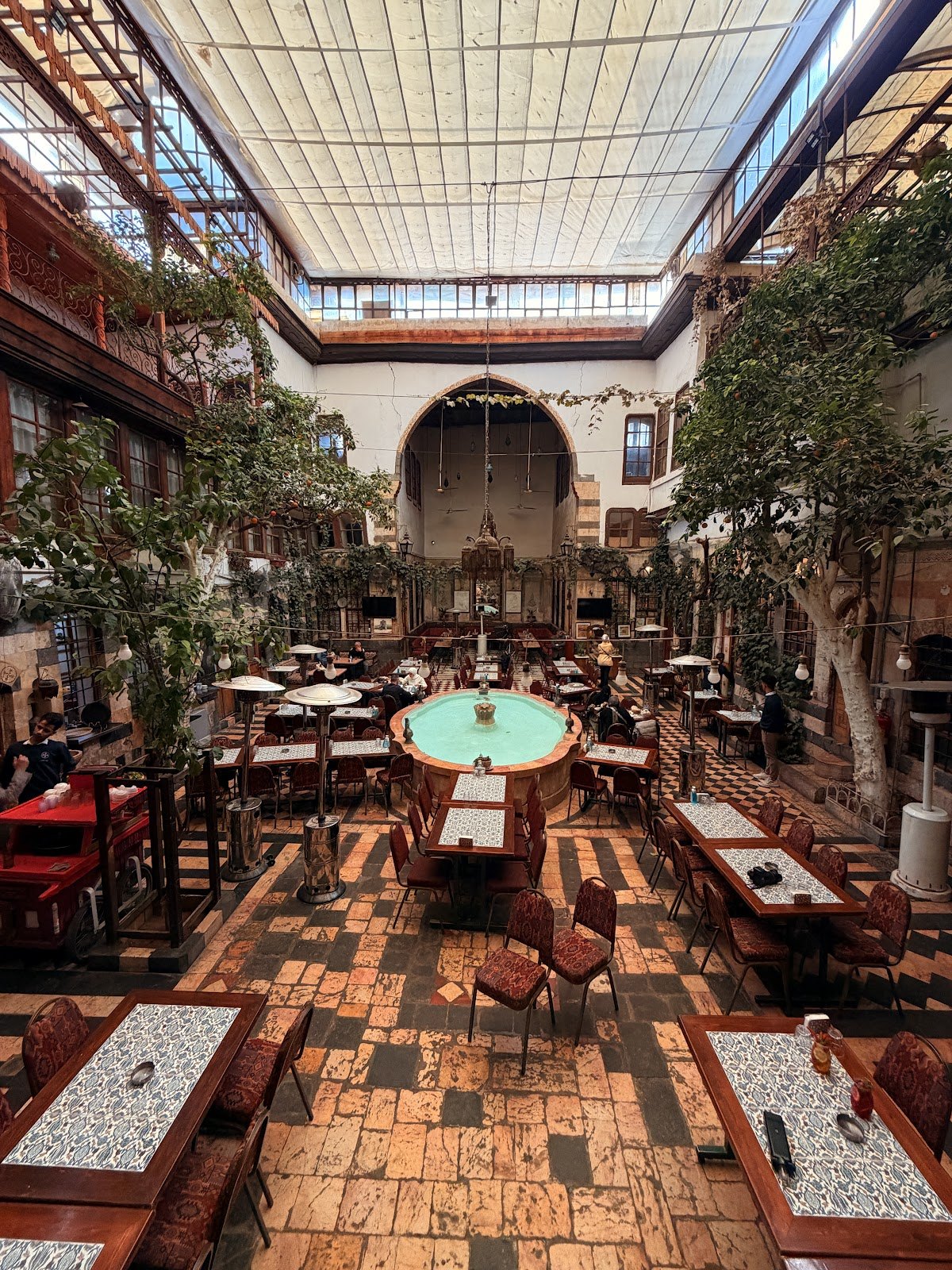
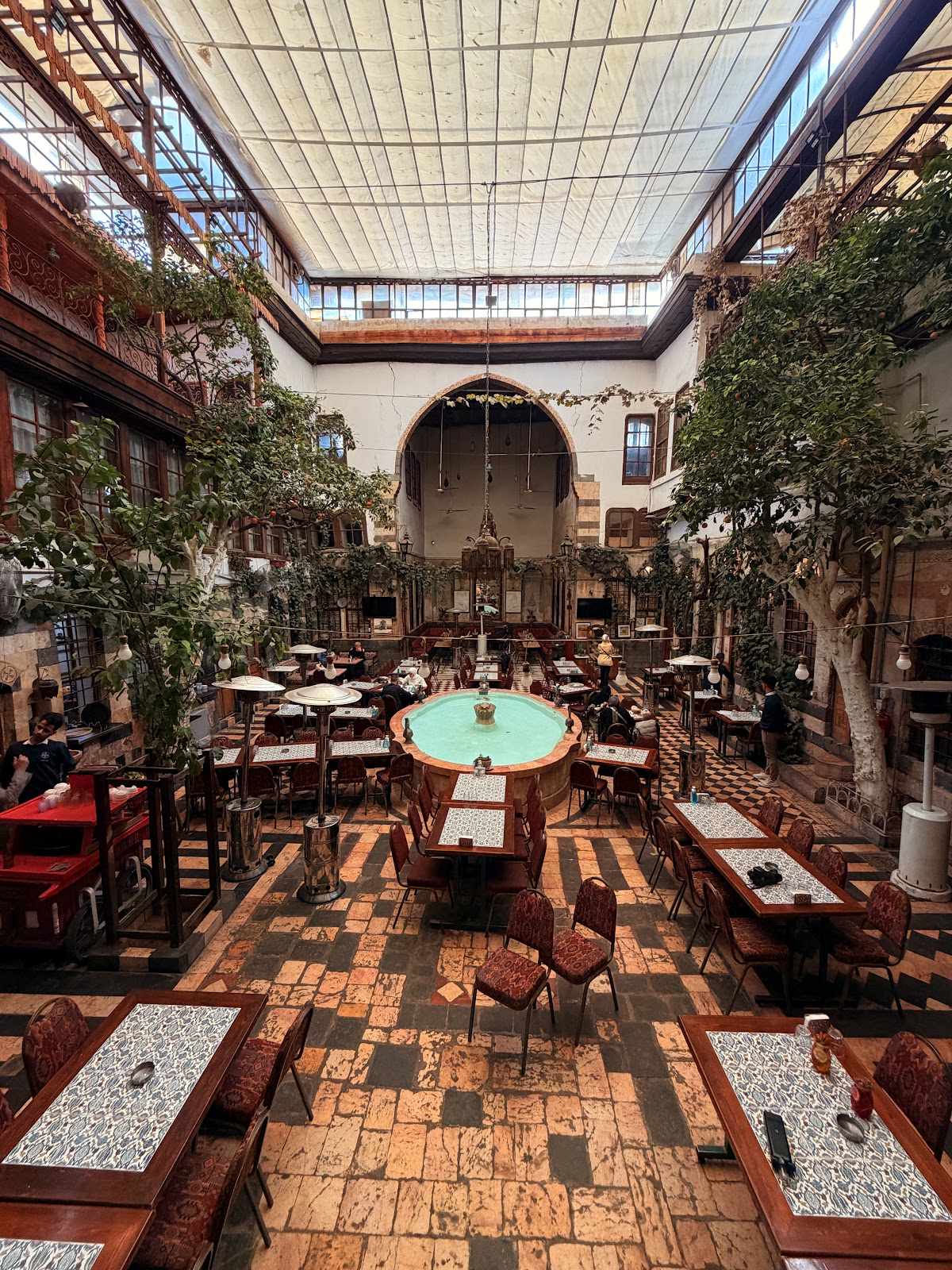
Fatteh, mezze and mixed grill inside an actual 1737 courtyard house, fountain included — one of the closest things to eating inside Old Damascus itself.
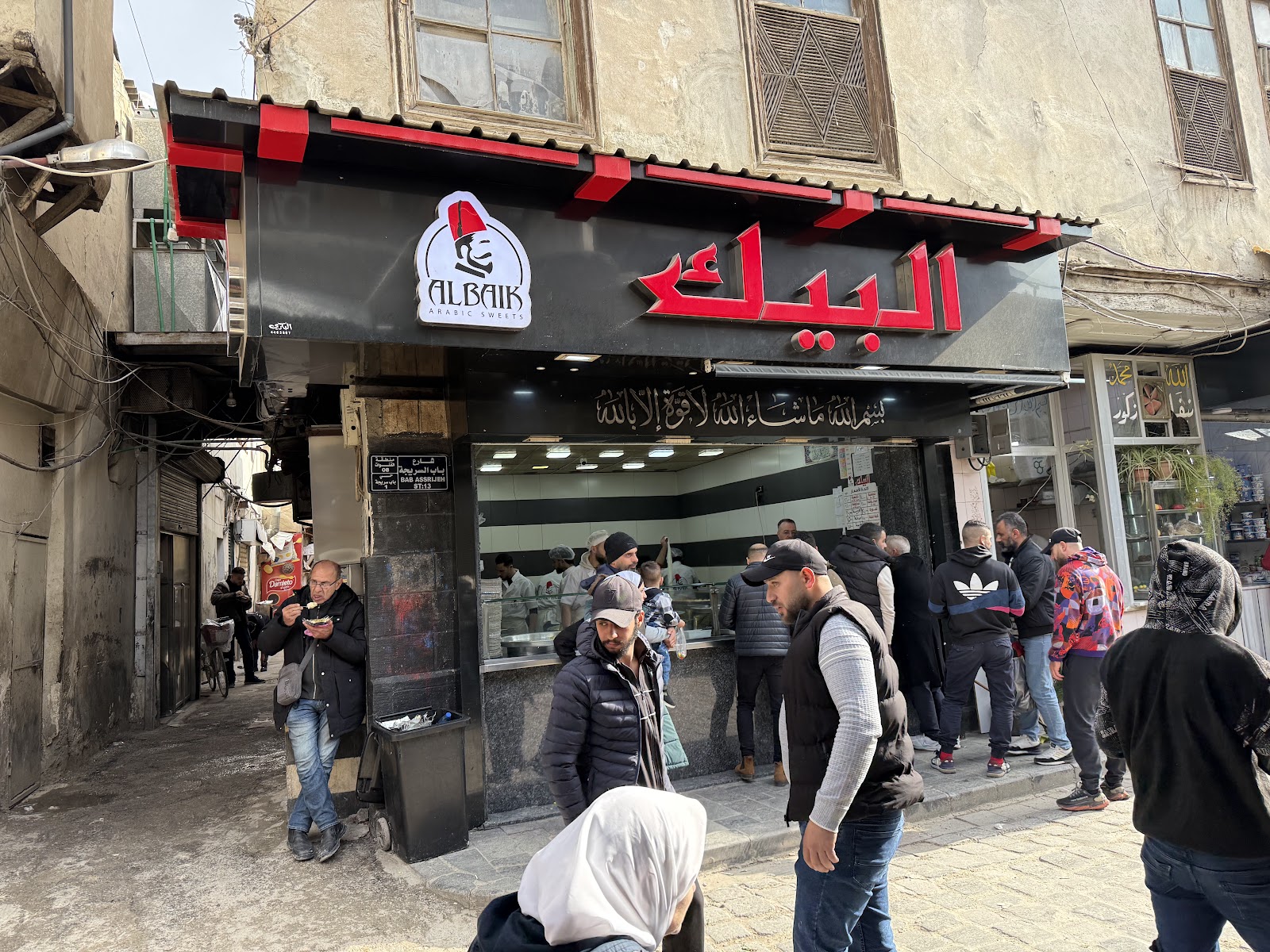
Knafeh that regulars call the best they've had anywhere, made with always-fresh bread and generous portions, tucked inside the old souq.
An Armenian sujuk sandwich made with real patience by a family who'll tell you its history along with your order — the highest-rated table on this list.
Turkish coffee and nargileh inside a beautifully restored Damascene house — quiet, unshowy, entirely itself.
Citron cake and coffee in a bakery-meets-bookshop — a modern concept with a genuinely Damascene spirit.
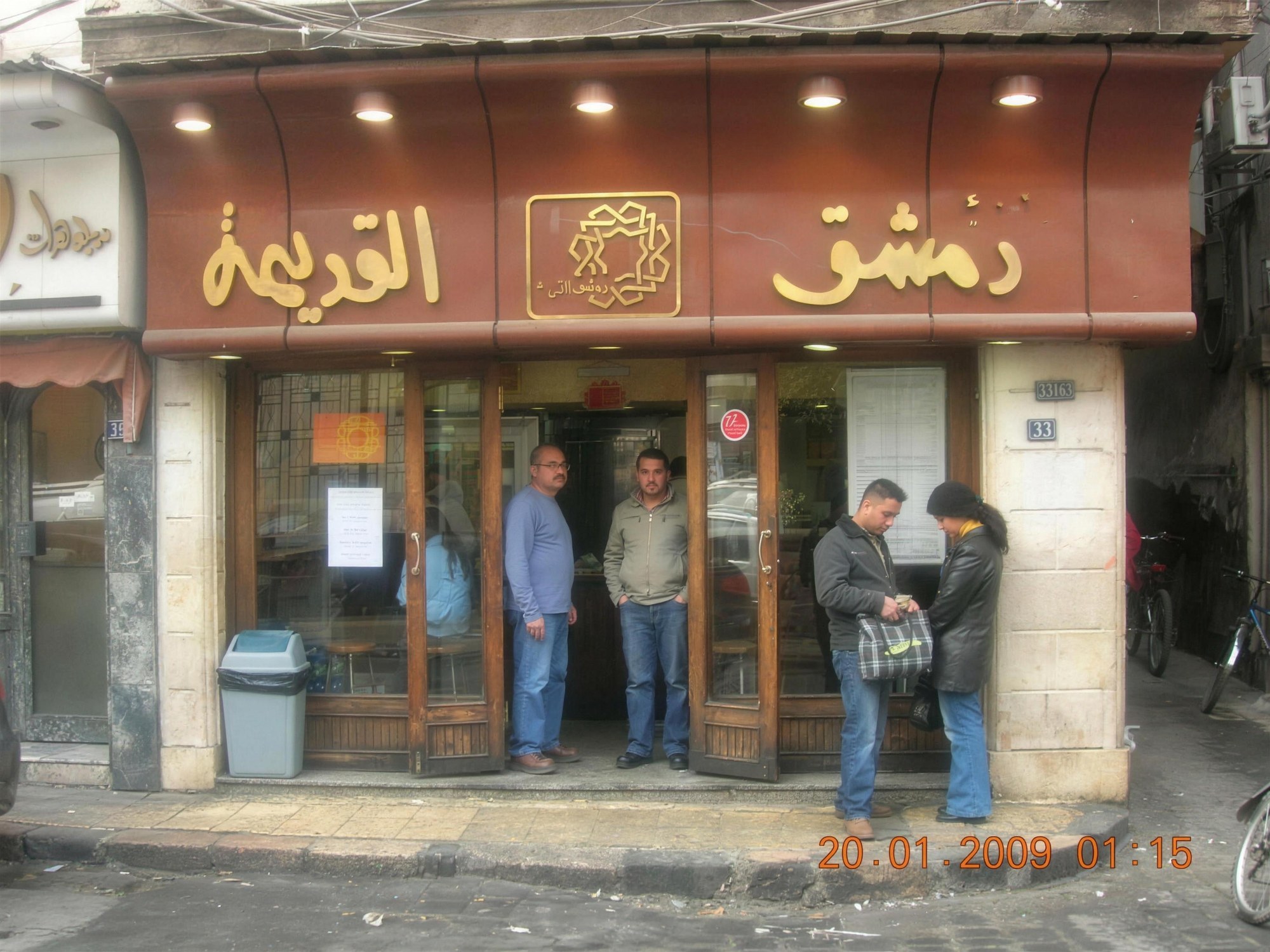
Quick, honest street food eaten on the very street the Book of Acts calls 'Straight' — it's still called that today.
Completed by Caliph al-Walid I on the site of a Roman temple and, before that, a Byzantine cathedral — one of the oldest and largest mosques on earth, and still the city's spiritual and civic heart.
The great covered market, laid along the line of an old Roman colonnaded road straight toward the mosque — and the address for Bakdash and several more of the tables above.
The Roman-era main street named in the Book of Acts, where Saint Paul is said to have stayed — split today into Midhat Pasha Street and Bab Sharqi Street.
An Ottoman governor's residence in banded black-and-white stone, now the Museum of Arts and Popular Traditions.
A plain street wall hiding a private courtyard, fountain and citrus trees — the city's signature domestic style. Some of the finest survivors, including Beit Jabri and Al Qishla Café above, now serve meals rather than standing empty.
The hill overlooking the whole city, lined with view restaurants and layered in local lore, including the Cave of the Seven Sleepers referenced in both early Christian sources and the Quran.
Official travel advisories for Syria vary by country and change over time — this guide doesn't make that call for you. Check your own government's current advisory immediately before making any plans (for example gov.uk/foreign-travel-advice/syria, travel.gc.ca, or travel.state.gov, or the equivalent for your own country). We don't offer security, entry or logistics advice here — that judgment belongs to you and your own government's current guidance, not to a food and heritage guide.
None of this is a pitch. It's a record of a real place — the mosque, the souq, the sweets counter, the courtyard fountain — kept the way it deserves to be kept, whether you're reading from Damascus itself, from a diaspora kitchen thousands of miles away, or from simple curiosity. If a trip becomes realistic for you one day, the ordinary practicalities of travel — an international eSIM, travel insurance — will exist the same as they do anywhere; this isn't the place selling them to you. For the full spread, from Bakdash's booza to the hakawati's storyteller, read The Tables of Damascus.
Damascus is one of the great food cities of the Levant: mezze culture, kibbeh, fatteh, shawarma judged by the spit and the bread, and a sweets tradition running from Bakdash's hand-pounded booza to knafeh and mabrouma on old confectionery counters — most of it centered on Souq al-Hamidiyya and the streets around the Umayyad Mosque.
That's a question only your own government's current travel advisory can answer — it varies by country and changes over time. As of this guide's writing in mid-2026, official advisories including the UK's and Canada's caution against travel to Syria; check your own foreign ministry's page (gov.uk/foreign-travel-advice/syria, travel.gc.ca, travel.state.gov, or the equivalent) before making any plans. This guide celebrates Damascus's food and heritage — it isn't advice on whether or how to travel there.
Bakdash is Damascus's legendary ice cream house in Souq al-Hamidiyya, open since the 1880s. Its booza — mastic-and-salep ice cream hand-pounded to a stretchy, chewy texture — is served with clotted cream (ashta) and crushed pistachio, made the same way, in full view of the queue, for well over a century.