This is a love letter to a table, not a travel pitch. Damascus has been feeding people for longer than almost anywhere on earth, and the kitchens, sweets counters and coffeehouses below are still doing it — for locals, for a shrinking number of visitors, and for anyone reading from a diaspora kitchen far away.
The tables, ranked
Fifteen real Old Damascus addresses, led by the flagship, then the direct heritage-tied picks, then by how strongly reviewers and regulars vouch for them.
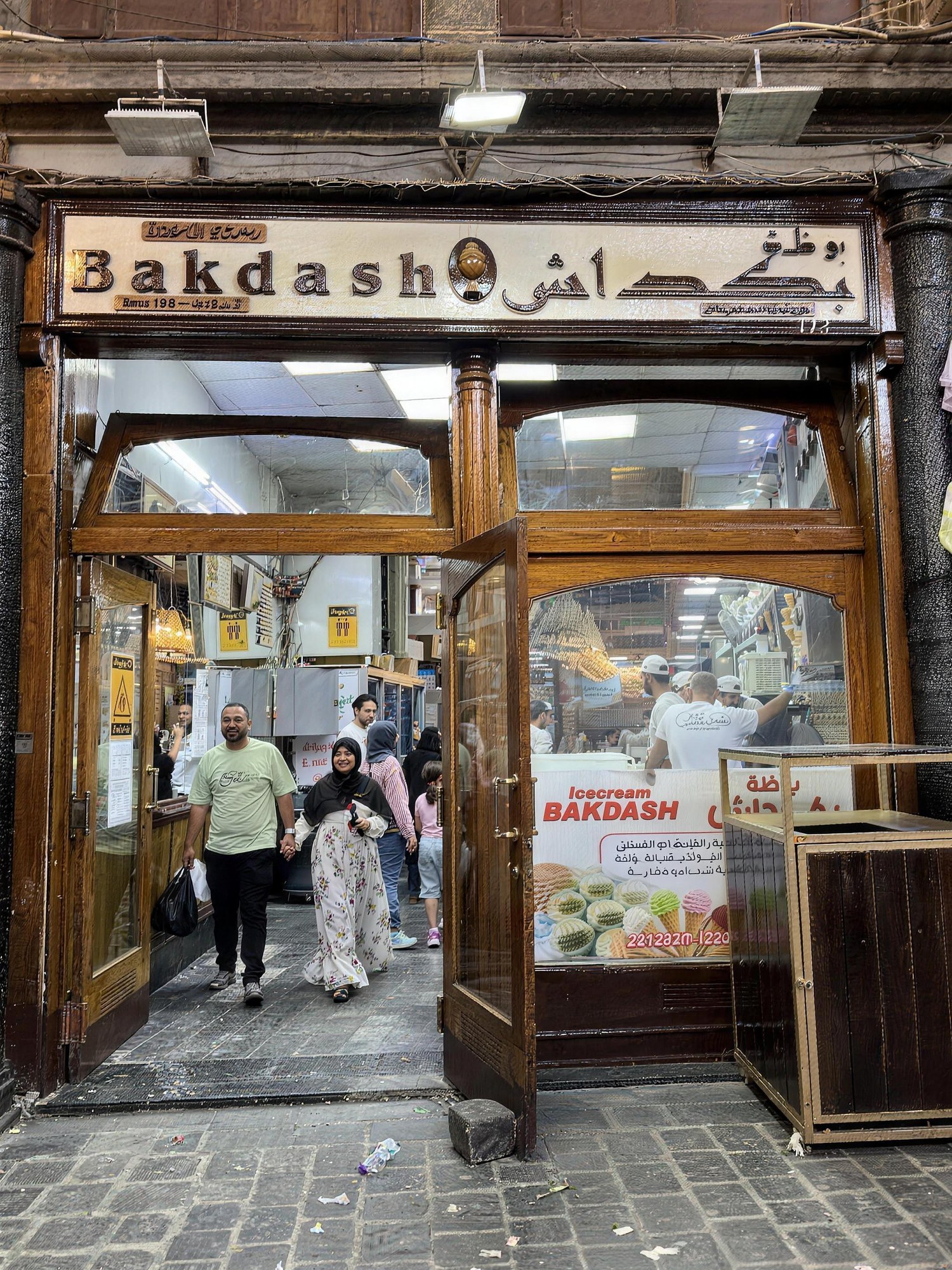
Bakdash
Open since the 1880s and still the legend of the souq — booza pounded by hand from mastic and salep until it stretches like taffy, served with clotted cream (ashta) and crushed pistachio. No delivery, no imitation, no changes to the method.
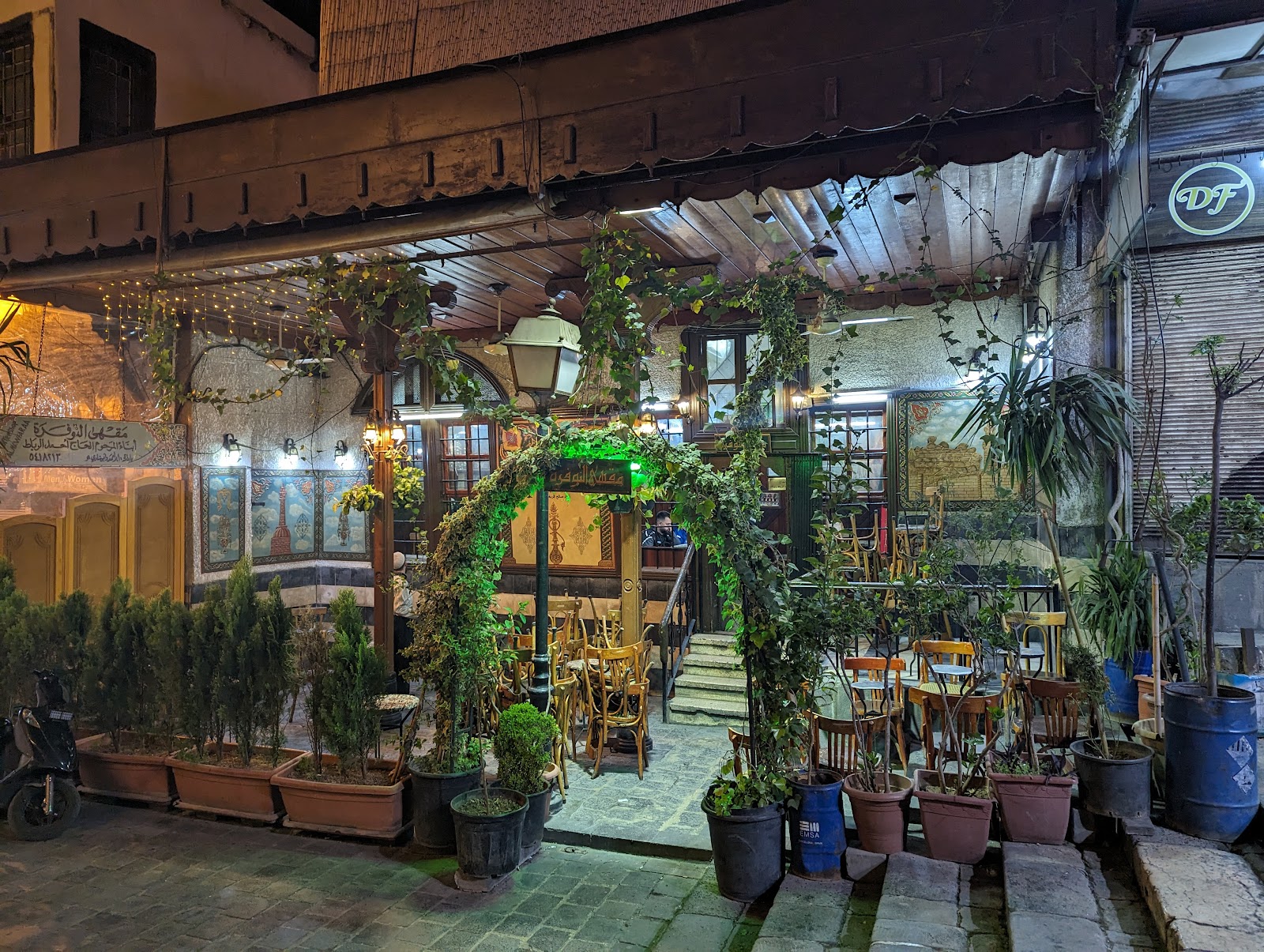
Al-Nawfara Café
Damascus's oldest café, right beside the Umayyad Mosque — thick Arabic coffee or sweet tea, a nargileh, and most evenings, a hakawati reading aloud from an old leather-bound book to a room of regulars.
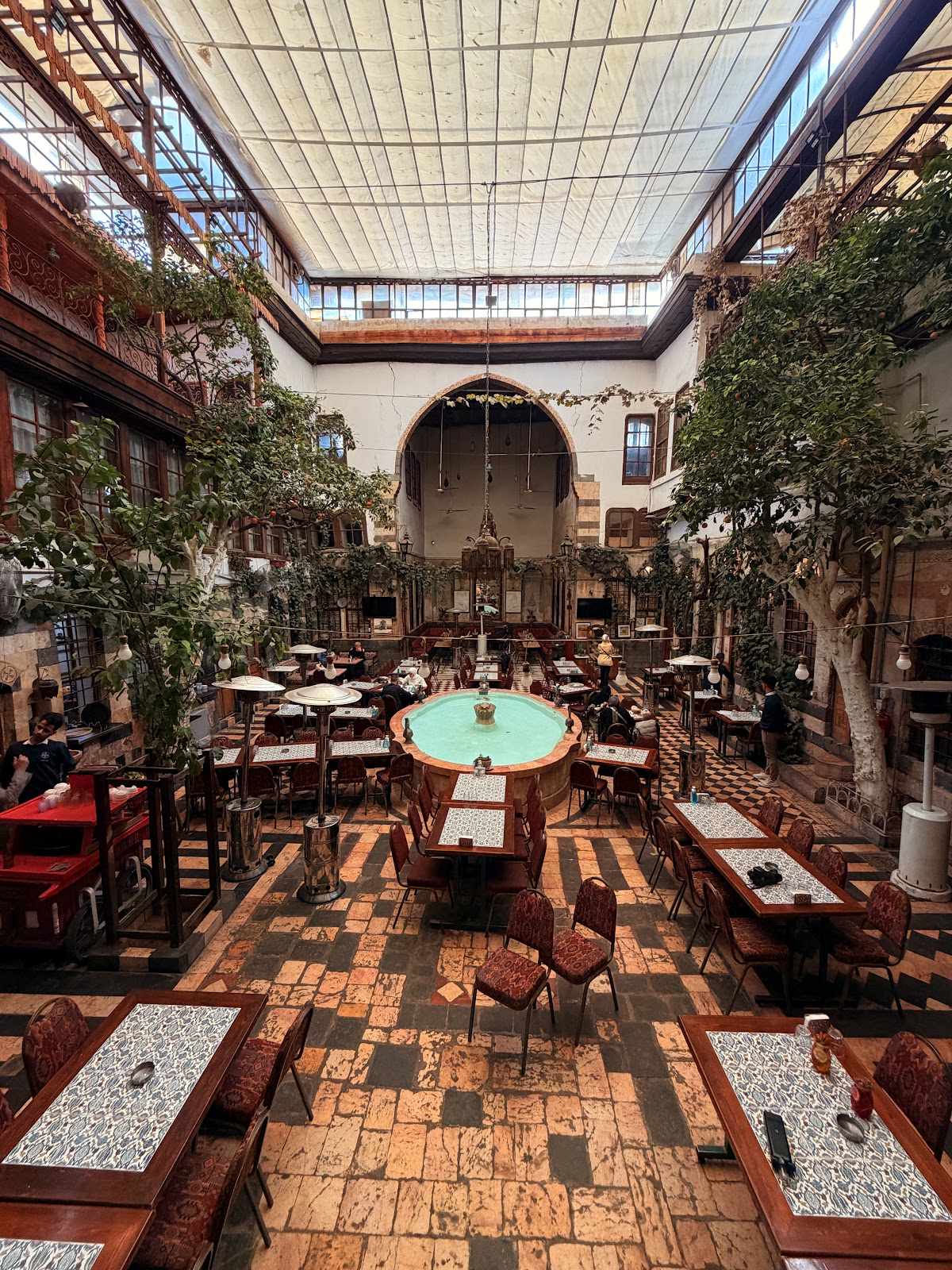
Beit Jabri
Fatteh, mezze and mixed grill inside a real 1737 courtyard house, fountain and all — one of the most complete ways to actually sit inside Old Damascus rather than just walk through it.
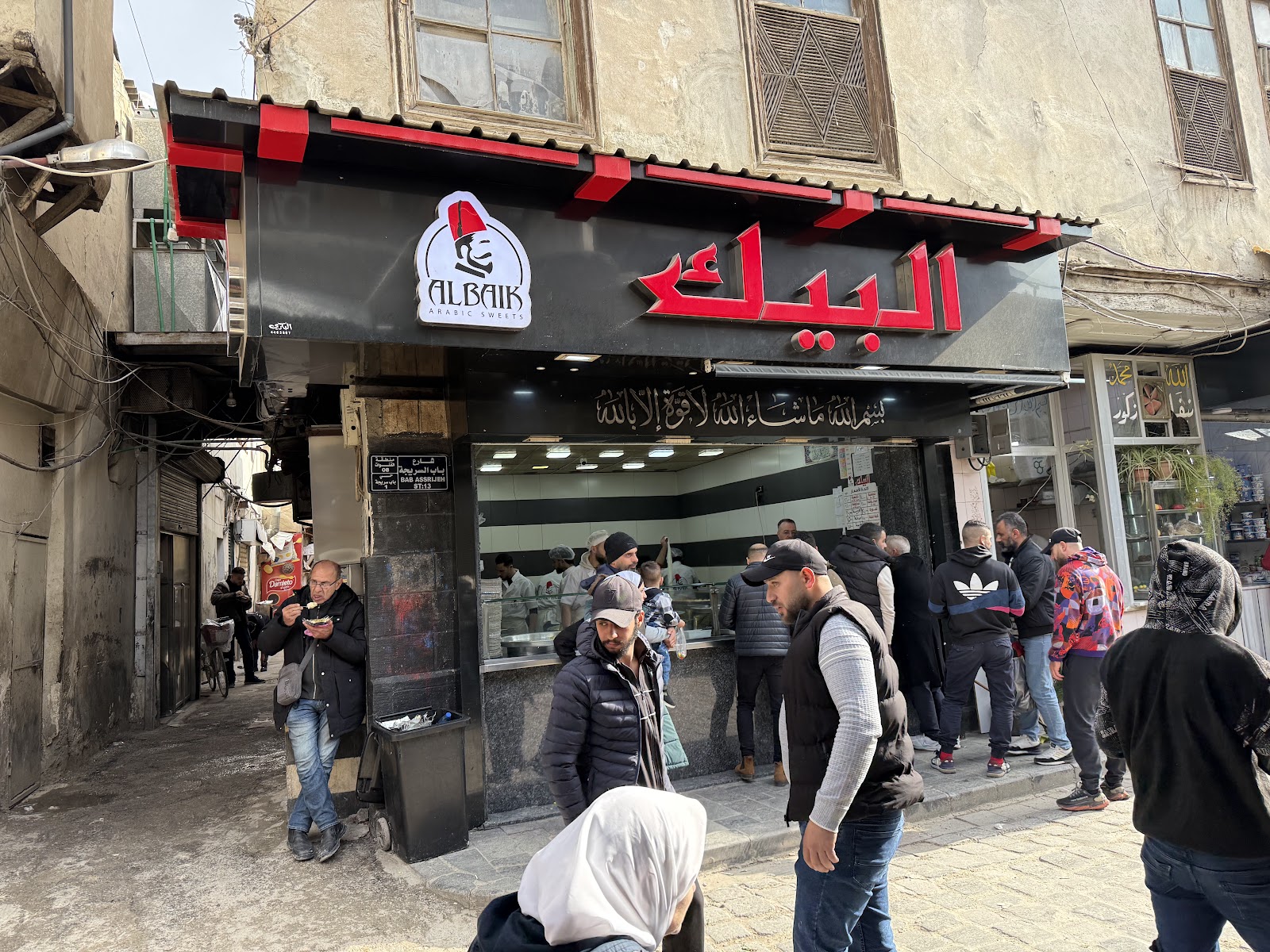
Al-Beik Sweets
Knafeh that regulars call the best they've had anywhere, made with always-fresh bread and no shortcuts, a short walk inside the old souq.
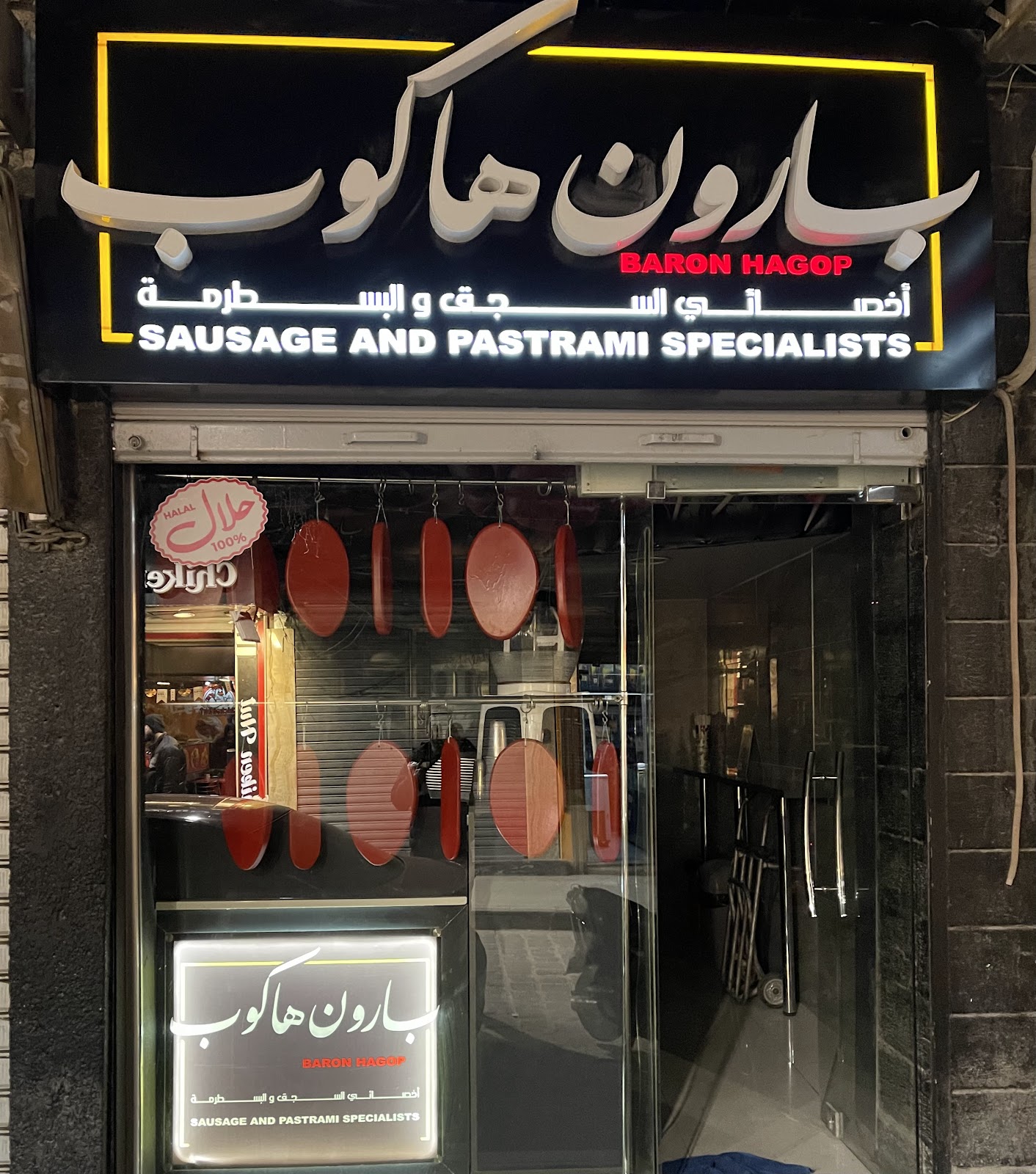
Baron Hagop
The highest-rated table on this whole list: an Armenian sujuk sandwich made with real patience by a family who'll tell you the history behind it while you wait.
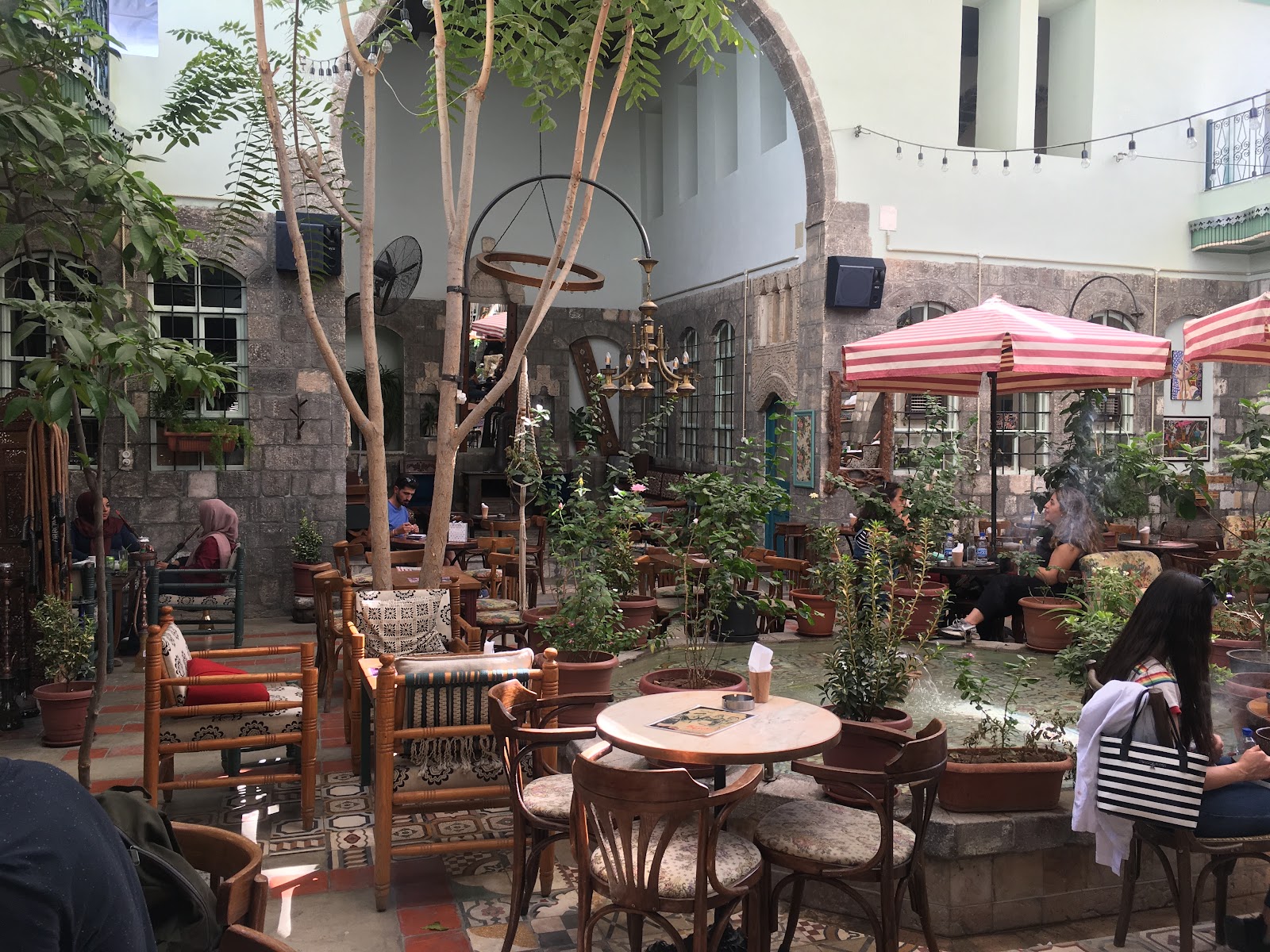
Al Qishla Café
Turkish coffee and nargileh inside a beautifully restored Damascene house — reviewers say it 'screams Damascus so quietly.'
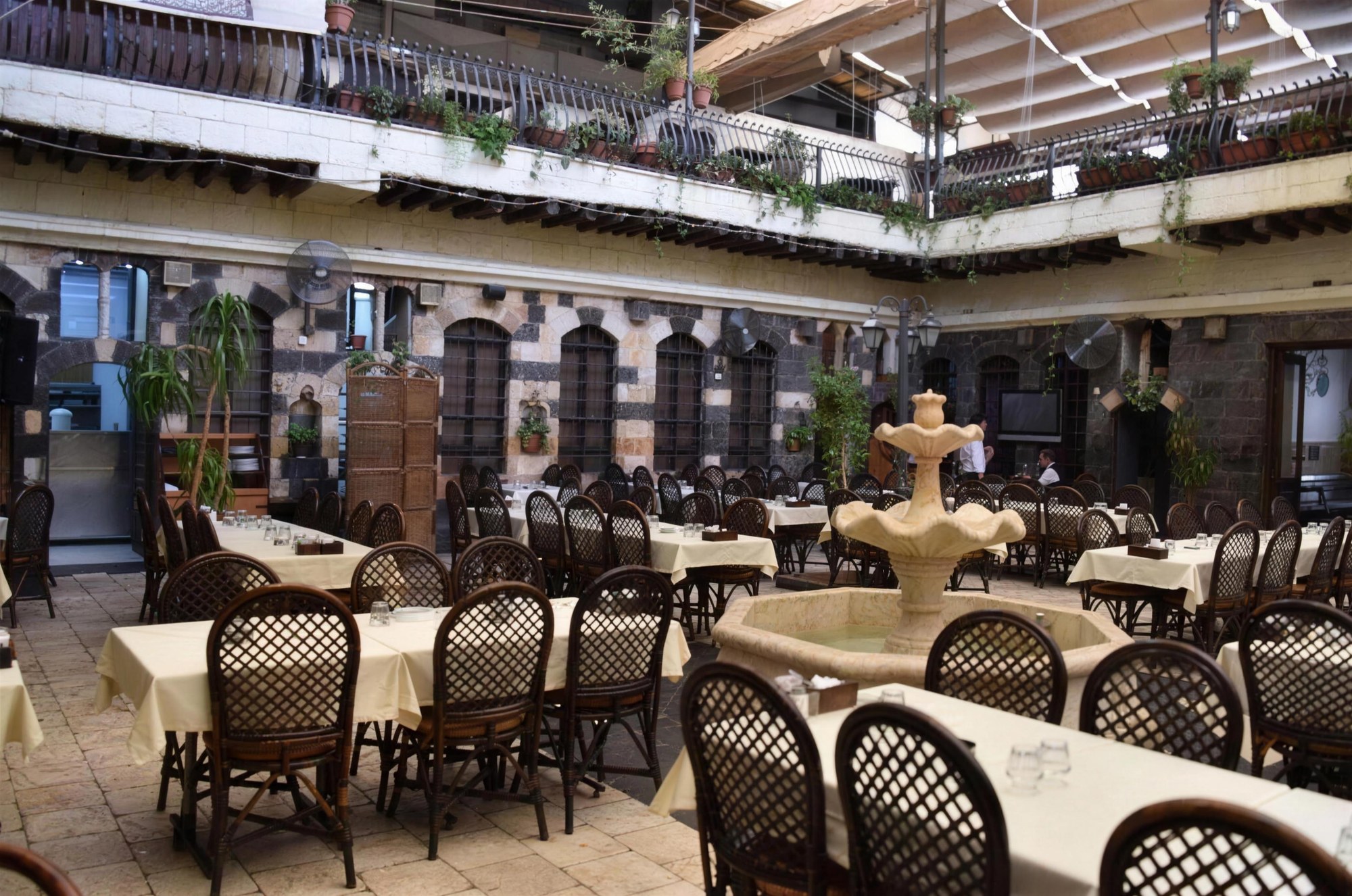
Haretna
Grills, mezze and shisha in a historic Bab Touma courtyard — reviewers call it 'a true classic in Old Damascus.'
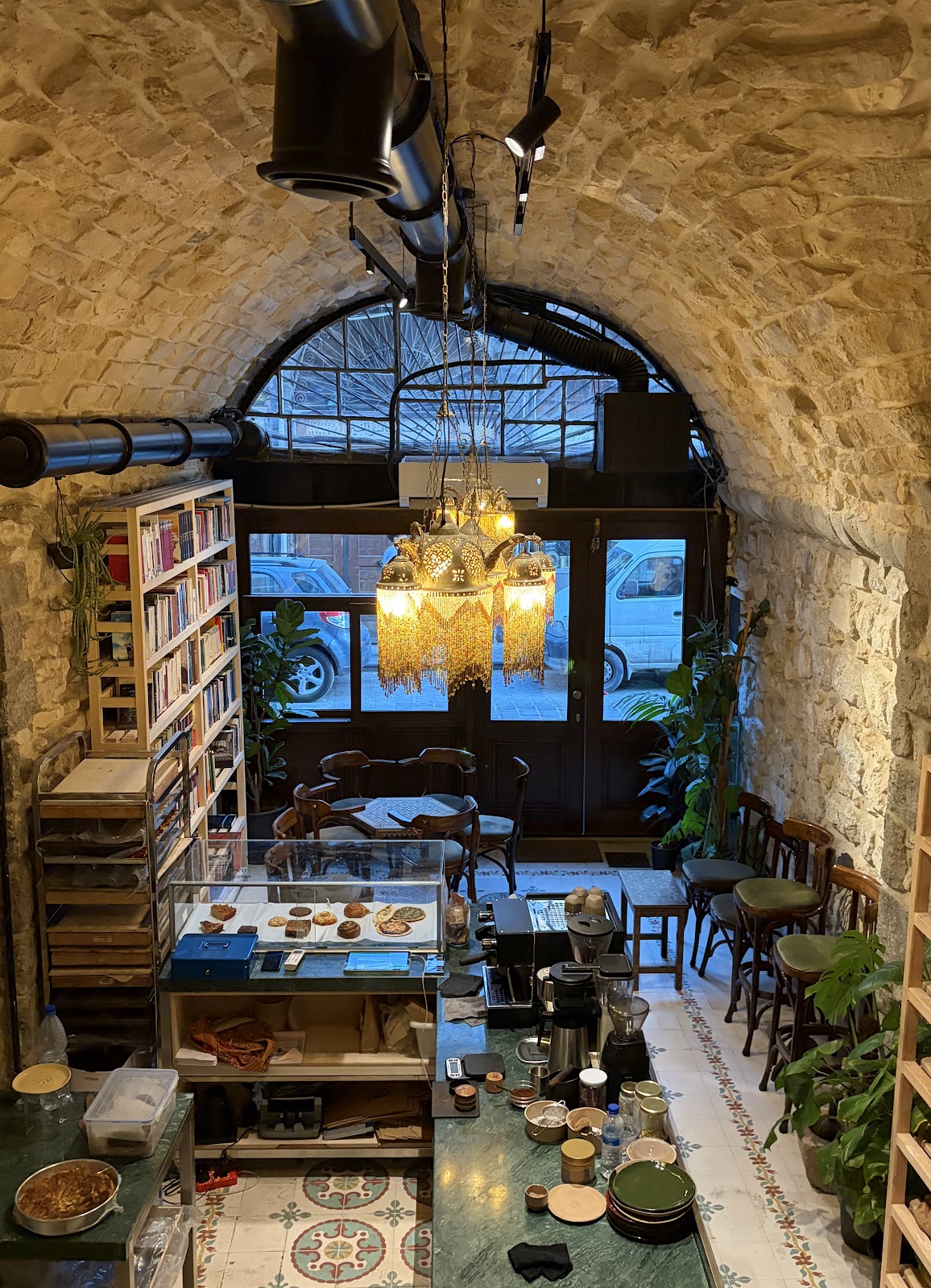
Al-Manhal Bakery & Books
Citron cake and coffee in a bakery-meets-bookshop — a modern concept with a genuinely Damascene spirit, and a personal pick from our own contact in the city.
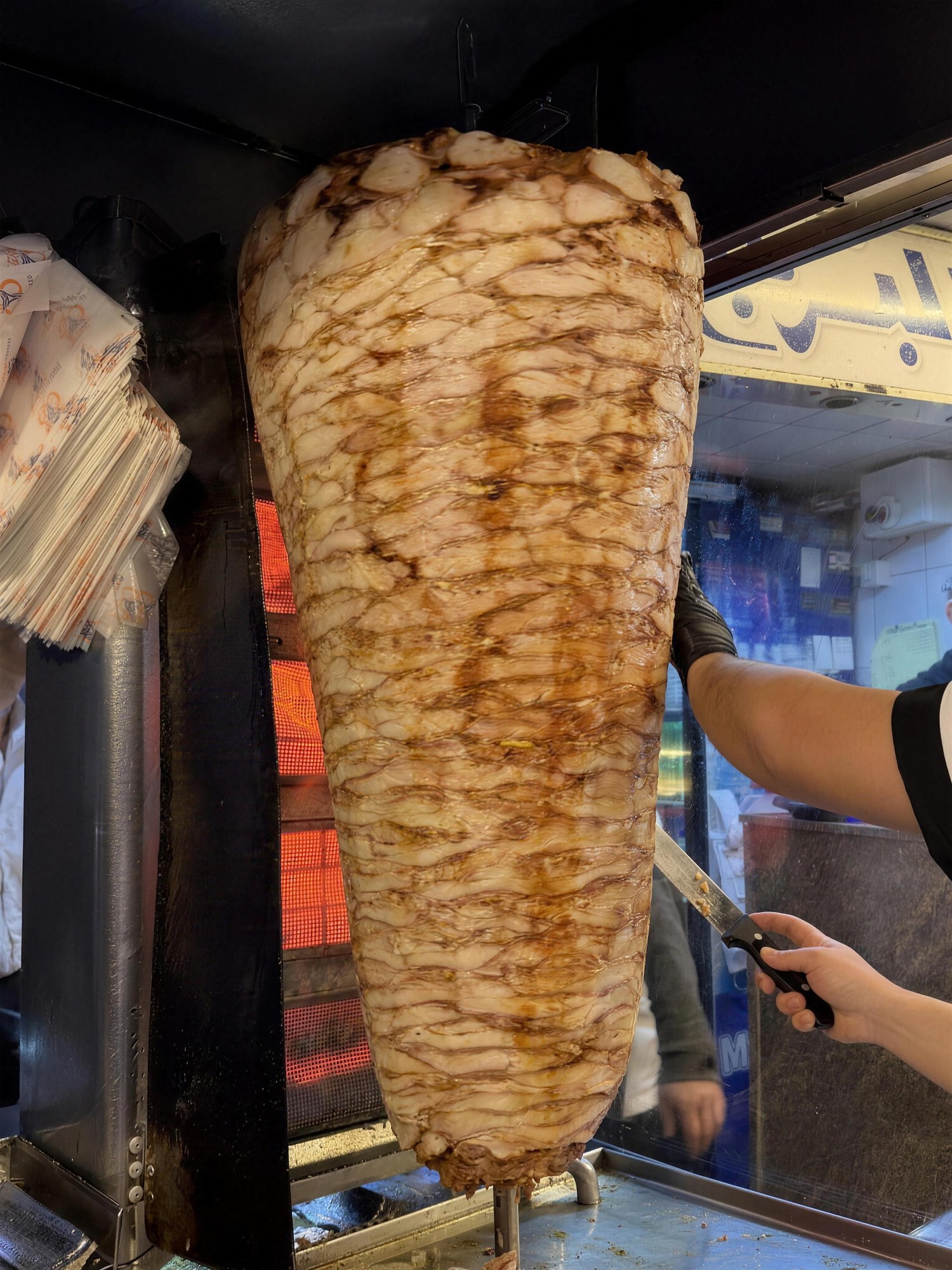
Al-Burj Shawarma
Chicken or lamb shawarma by the sandwich or the kilo, five minutes from the Bab Touma gate — the corner locals actually send visitors to.
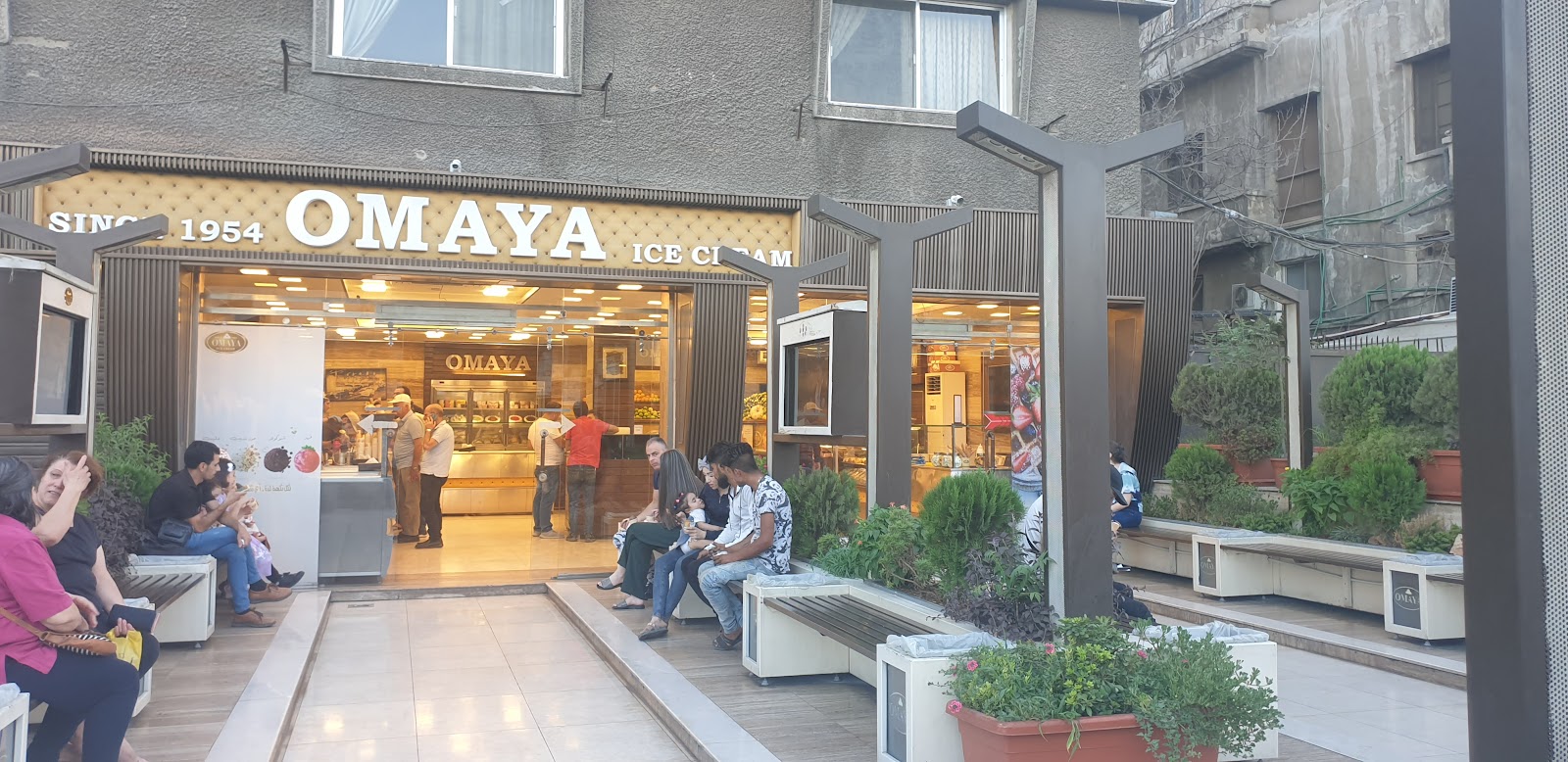
Omaya Ice Cream
The Old City's other great ice cream house: a wide flavor range and fresh juice, easy to fold into a walk through the souq.
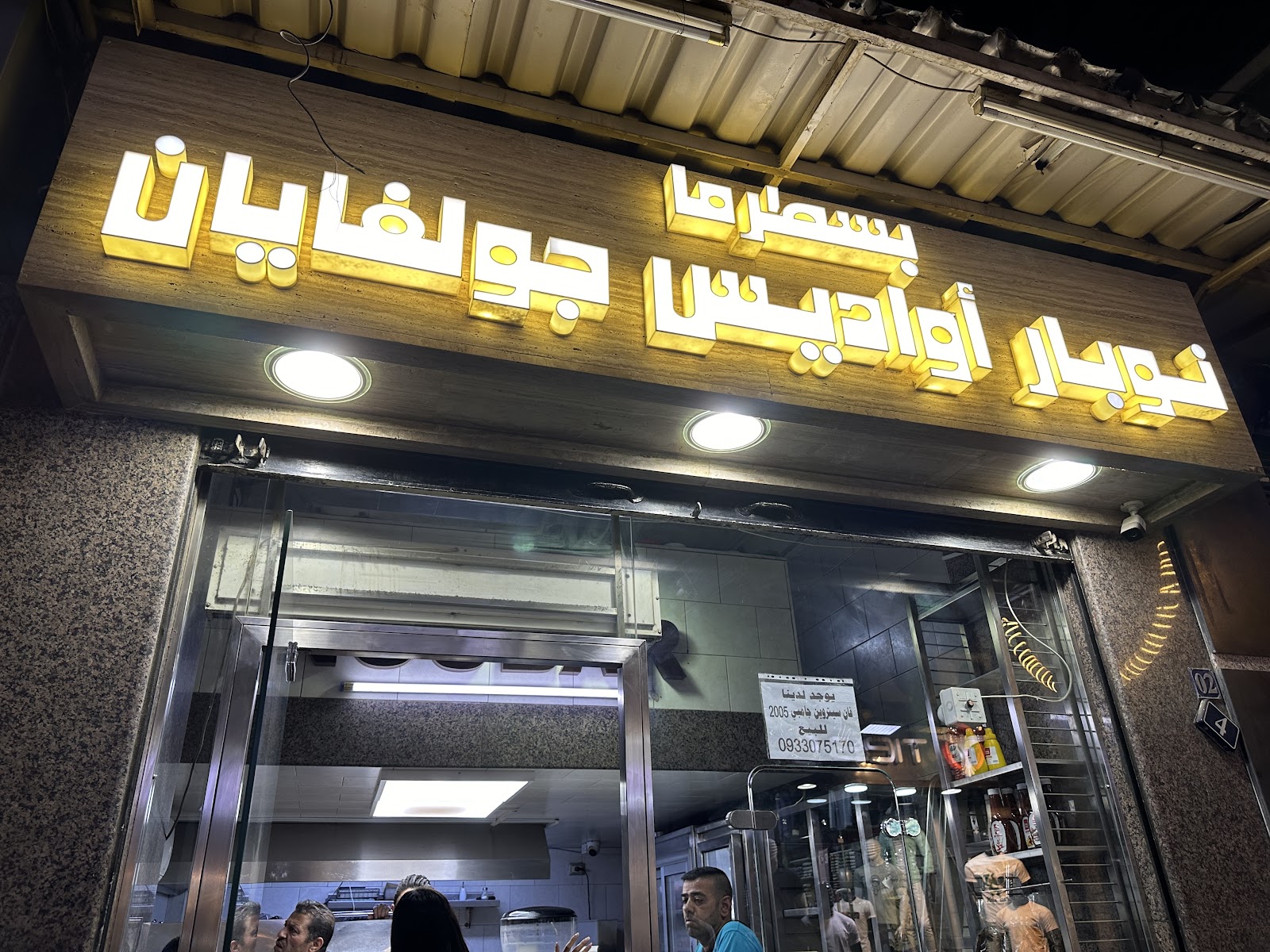
Nubar Avedis Golfayan
Armenian sujuk and basterma cured the same way for generations — regulars describe the quality as unchanged for more than thirty years.
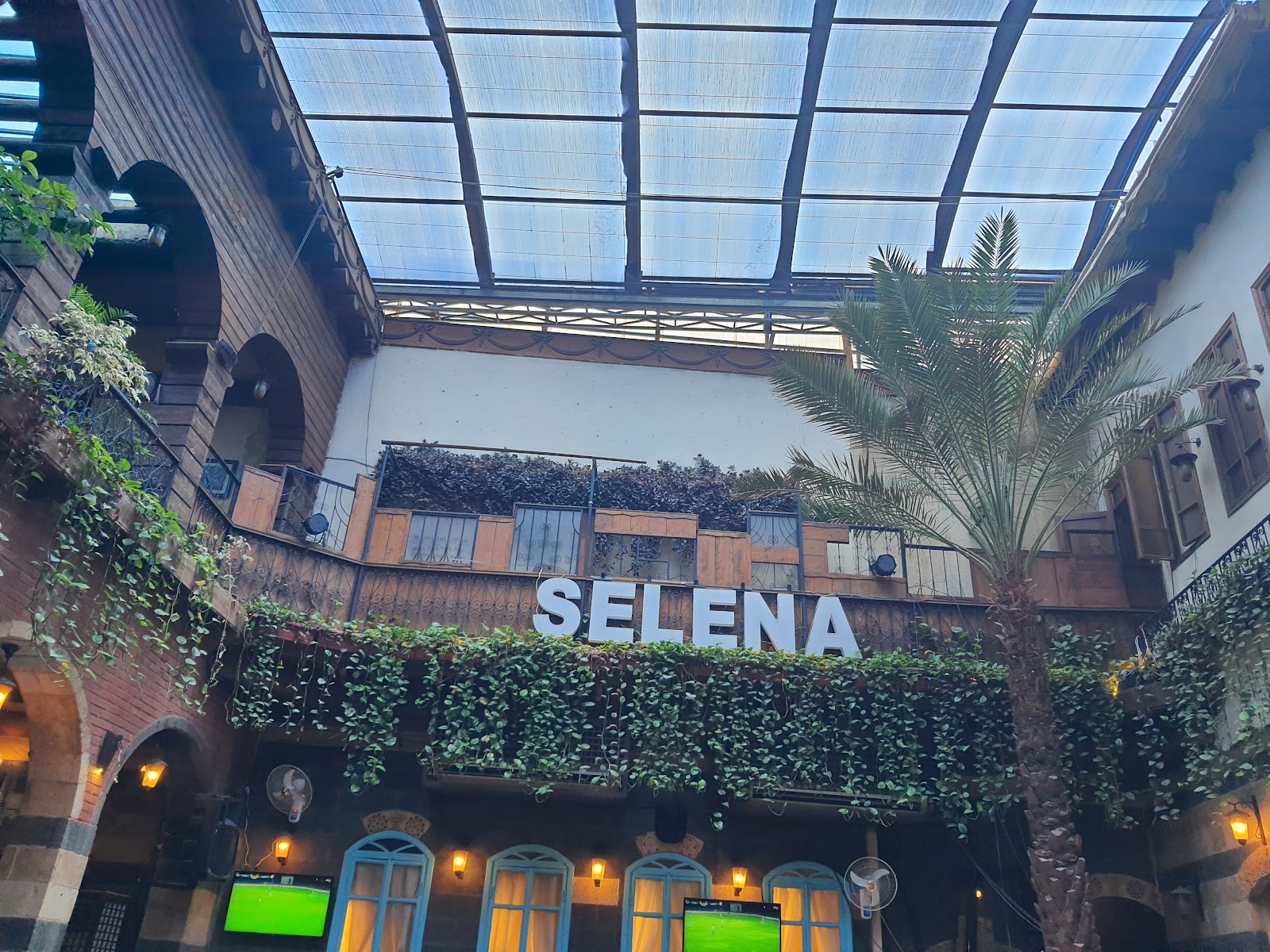
Selena
Khaberniya and shish tawook beside a courtyard fountain — a relaxed, quietly romantic Old Damascus room.
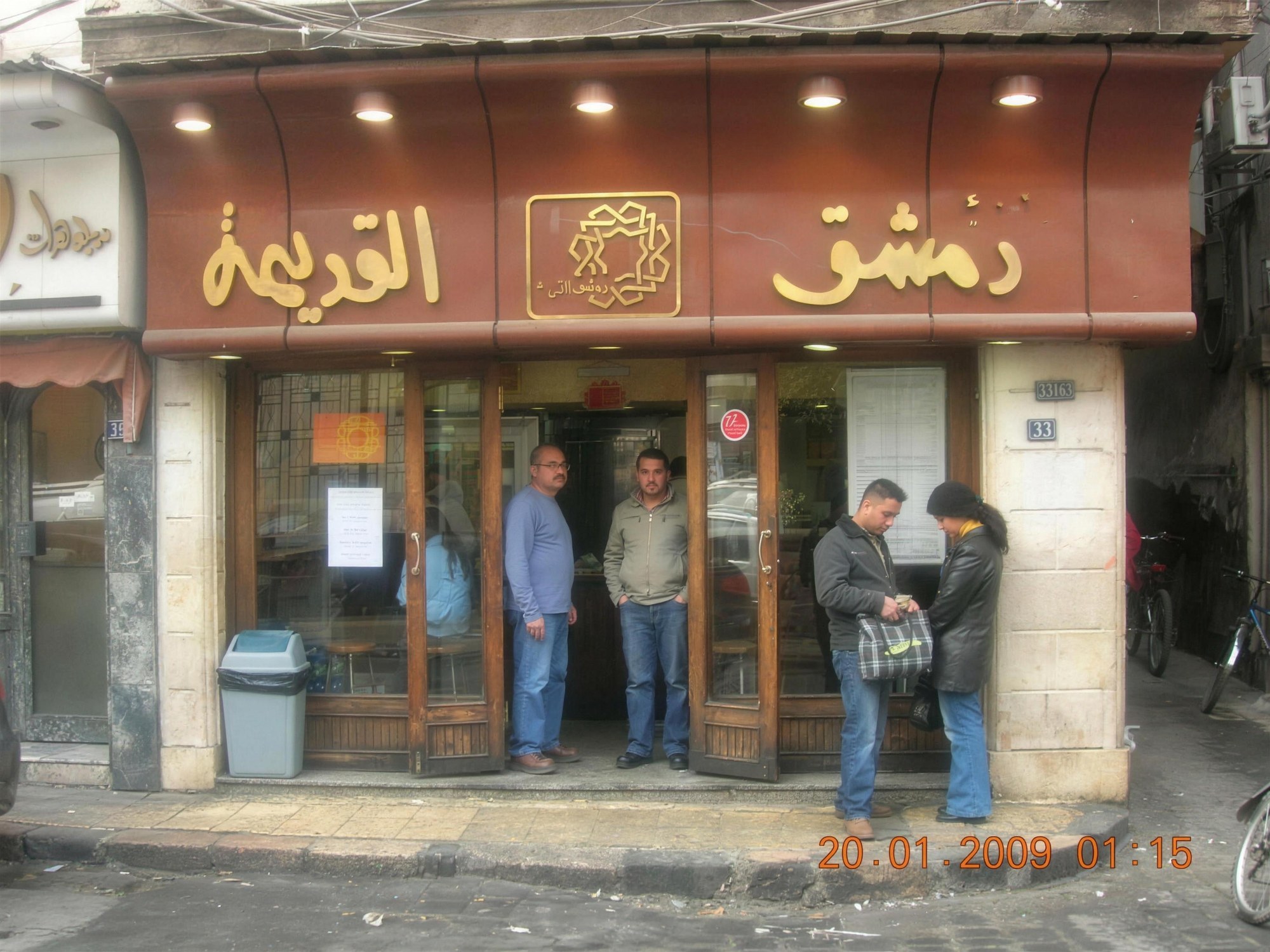
Old Damascus Snack
Quick, honest street food eaten on the very street the Book of Acts calls 'Straight' — it's still called that today.
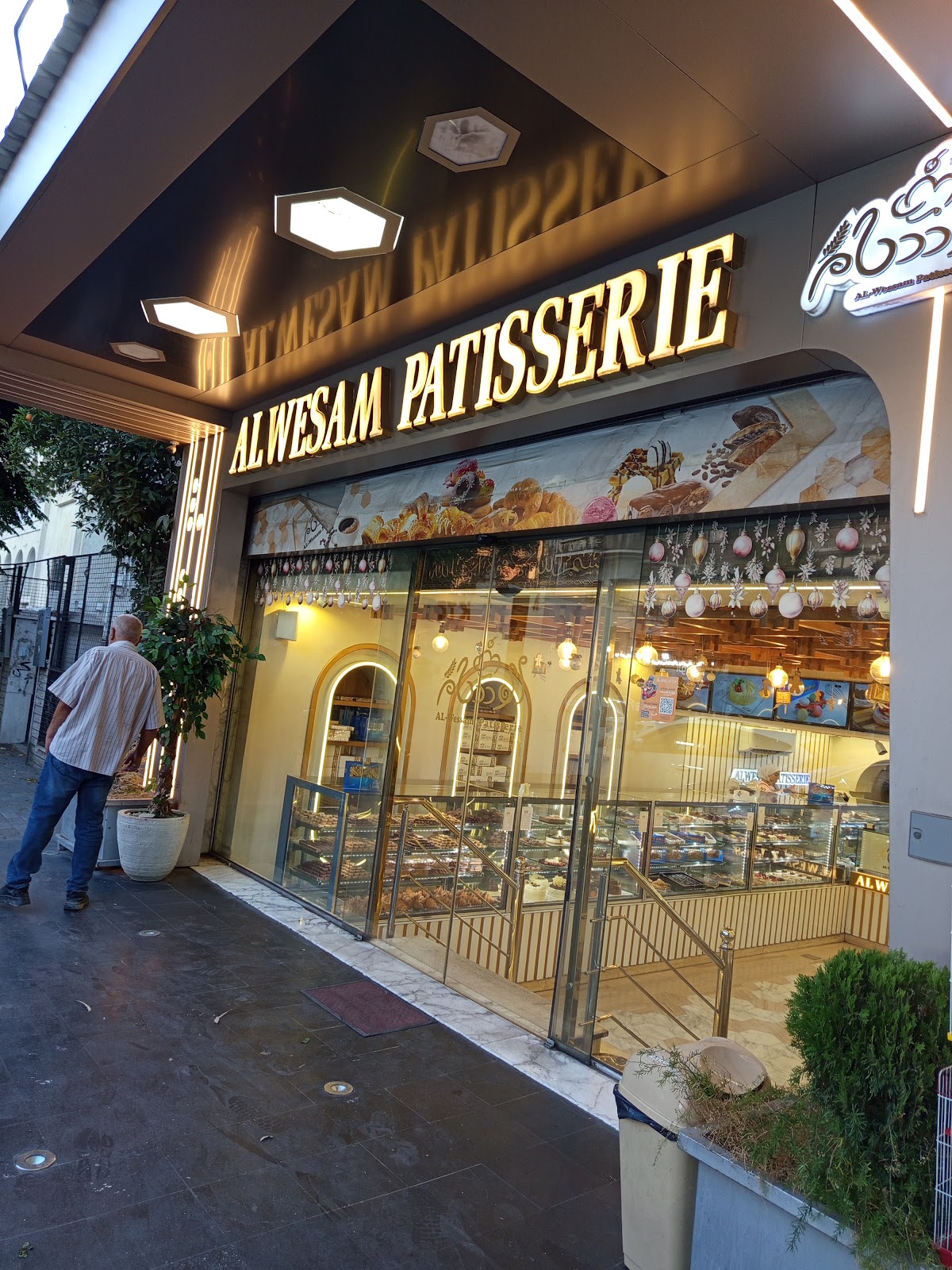
Al Wesam Sweets
Knafeh nabulsiyeh, mabrouma and a full Damascene sweets counter made properly, with samneh (clarified butter) instead of shortcuts.
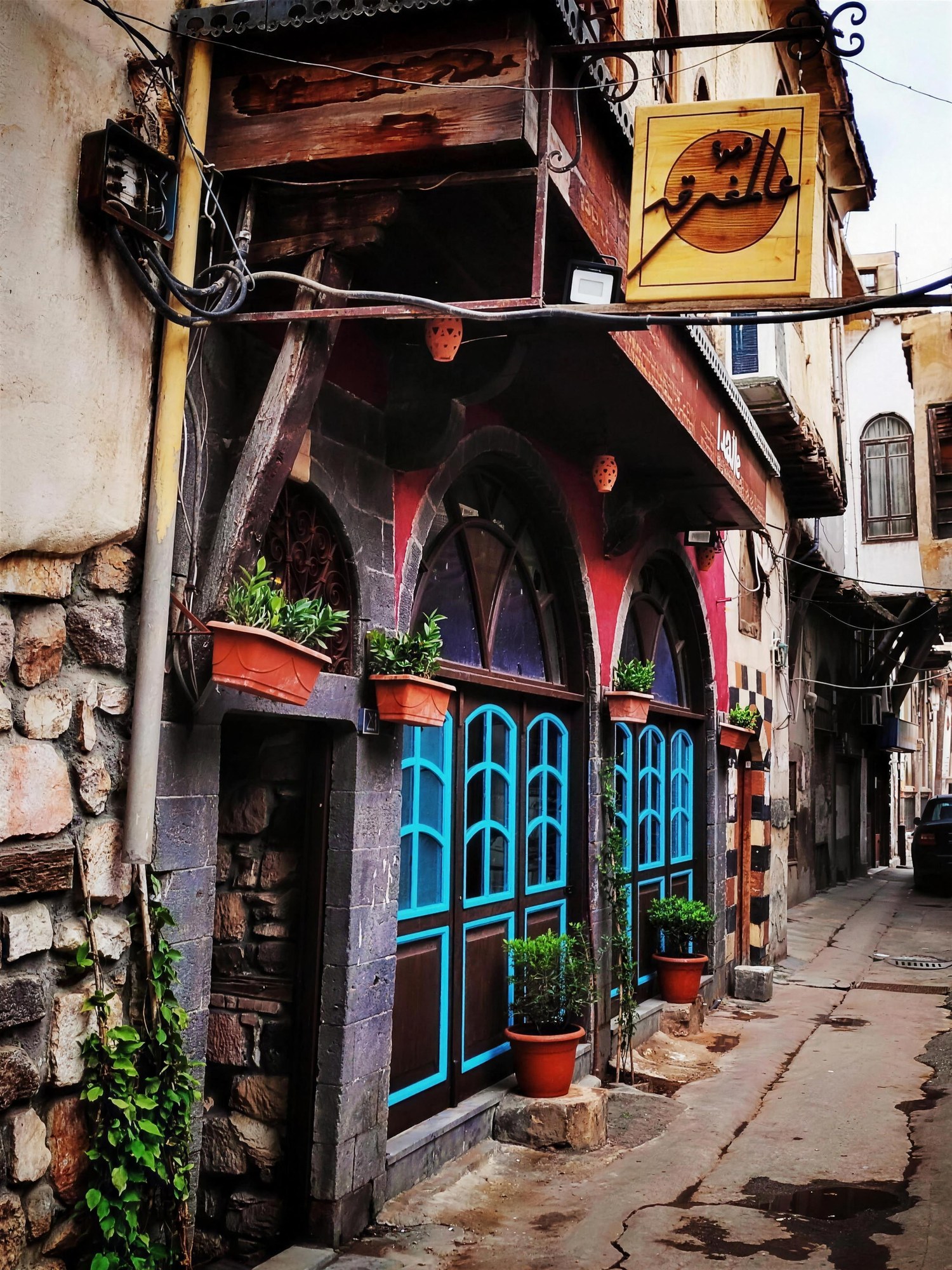
Kahwet Almafraq
Coffee with Fairuz on the speakers, tucked into a lane in Al-Qaymariyya — small, unhurried, exactly what an Old City coffee break should feel like.
The dishes that define the table
- Damascene mezze — the ritual of small shared plates (hummus, mutabbal, fattoush, kibbeh nayyeh) that opens a real meal, built for a table of family and friends, not a solo diner.
- Kibbeh — bulgur worked with minced lamb and spices into torpedoes, patties or baked trays; Syria's most-cited signature dish, and a point of real regional pride and rivalry.
- Fatteh — toasted or fried flatbread layered under yogurt or tahini, chickpeas, or chicken; a Damascus breakfast or shared starter, and on the menu at Beit Jabri above.
- Shawarma — meat shaved from a vertical spit into fresh bread; a Damascus street-food backbone long before it became a global export, still judged locally by the spit and the bread, not the sauce.
Bakdash, booza and the sweets counter
Bakdash has been doing one thing since the 1880s: booza, Damascus's own frozen dessert, made from mastic and salep (ground orchid root) and worked by hand until it stretches and resists melting — pounded to order in full view of the queue in the souq. It's the anchor of a much bigger sweets tradition. Knafeh — shredded pastry or semolina over soft cheese, soaked in syrup — sits alongside mabrouma and baklawa on old confectionery counters that were already refining this craft under the Umayyads. Even the rosewater running through half of it has the city's name on it: the damask rose, Rosa × damascena, takes its Western name directly from Damascus.
| Sweet | Where to try it | What makes it different |
|---|---|---|
| Booza | Bakdash, in the souq | Mastic and salep worked by hand until it stretches and resists melting — pounded to order in full view of the queue. |
| Knafeh | Al-Beik Sweets or Al Wesam Sweets | Shredded pastry or semolina over soft cheese, soaked in syrup — Al-Beik's is the version reviewers single out most. |
| Mabrouma & baklawa | Al Wesam Sweets and the old confectionery counters | Layered, syrup-soaked pastries made with samneh (clarified butter) — the rest of the classic sweets counter. |
| Rosewater | Woven through syrups and drinks citywide | The damask rose (Rosa × damascena) takes its Western name from Damascus itself. |
The sweets counter is an everyday institution here, not a special-occasion trip — that's exactly why it works.
Old-city coffeehouses & the hakawati
Slow tea or Arabic coffee and a nargileh are their own ritual here, and no address does it better than Al-Nawfara, Damascus's oldest café, tucked beside the Umayyad Mosque. It's historically also home to the hakawati — a professional storyteller who recites serialized tales from an old leather-bound book to a room of regulars, most evenings, in what might be the most human, most alive version of the city you can sit inside. Al Qishla Café and Kahwet Almafraq keep the same spirit in quieter old-city lanes — one inside a restored Damascene house, the other with Fairuz on the speakers.
Where all of this happens
Souq al-Hamidiyya
Almost everything above sits inside or beside Souq al-Hamidiyya, Damascus's great covered market, built from around 1780 under the Ottoman sultans Abdul Hamid I and II. It runs roughly 600 meters along the line of an old Roman colonnaded road, straight toward the Umayyad Mosque — and it's the address for Bakdash and several more of the eats above.
The Umayyad Mosque
The mosque itself was completed in 715 CE by Caliph al-Walid I, on the site of a Roman Temple of Jupiter and, before that, a Byzantine cathedral. It's one of the oldest and largest mosques in the world, and its basilical plan and gold mosaics shaped mosque architecture across the Islamic world — it remains the spiritual and civic heart of the city today.
Straight Street
A few minutes' walk away is Straight Street — the Roman and Seleucid-era main street, 'the street called Straight' from the Book of Acts, where Saint Paul is said to have stayed and later escaped the city. It's split today into Midhat Pasha Street (the souq side) and Bab Sharqi Street (toward the Eastern Gate); Old Damascus Snack sits directly on it.
Courtyard houses & Azem Palace
Old Damascus's signature architecture is the courtyard house — a plain street wall hiding a private courtyard, fountain and citrus trees. Several of the finest survivors, including Beit Jabri and Al Qishla Café above, have been turned into restaurants and cafés rather than left empty, which is as good a way as any to actually experience one. The grandest version open to the public is Azem Palace, an Ottoman governor's residence built in 1749 in banded black-and-white stone, now the Museum of Arts and Popular Traditions.
Mount Qasioun
For the view over all of it, Mount Qasioun rises 1,151 meters over the city, lined with restaurants and layered in local lore — including the Cave of the Seven Sleepers, referenced in both early Christian sources and the Quran.
Official travel advisories for Syria vary by country and change over time — this page doesn't make that call for you. Check your own government's current advisory before making any plans (gov.uk/foreign-travel-advice/syria, travel.gc.ca, travel.state.gov, or your own country's equivalent), and treat this guide as a record of Damascus's food and heritage, not as travel, entry or safety advice.
Damascus's food and heritage are real and worth documenting whether or not a given reader can visit in person right now. This is written for people with Damascene roots abroad, for cooks and researchers, for anyone who loves this city from a distance — and for the day the doors open wider. It's a record, not a pitch.
Frequently asked questions
What is the signature dish of Damascus?
There isn't just one — a real Damascene meal opens with mezze (small shared plates like hummus, mutabbal and fattoush) before kibbeh arrives: bulgur worked with minced lamb and spices into torpedoes or patties. Kibbeh is Syria's most-cited signature dish and a genuine point of regional pride.
What is booza, and how is it different from regular ice cream?
Booza is Damascus's own frozen dessert, made from mastic and salep (ground orchid root) and worked by hand until it stretches and resists melting — a much chewier, denser texture than Western ice cream. Bakdash, open since the 1880s in Souq al-Hamidiyya, is the address that made it famous, pounding it to order in full view of the queue.
What is a hakawati?
A hakawati is a traditional Arab storyteller who recites serialized tales aloud from an old leather-bound book to a café full of regulars. Al-Nawfara, Damascus's oldest café beside the Umayyad Mosque, is one of the last places keeping the tradition alive, most evenings.